
 Subscribe to the newsletter
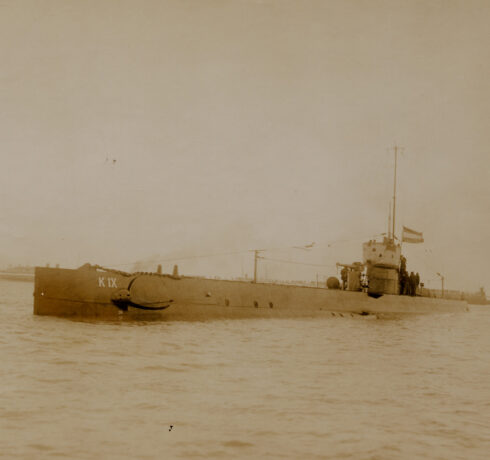
The Royal Schelde shipyard is inextricably linked to Vlissingen and Zeeland. However, Schelde history can also be found outside the province. In this series, Schelde Schakels searches for those forgotten pieces of the past.
For this edition, we travel to the other side of the world, because ‘down under’ there is a piece of Schelde history to be found, but only if you look very carefully. Beneath the sand of an idyllic beach in Myall Lakes National Park, New South Wales, lie the remains of the Schelde-built submarine HNLMS K IX. Most of the time, the submarine remains hidden from view, but every now and then parts of the hull are exposed.
Text: Eefje Koppers
The K IX was the second submarine of the K VIII class built for the Royal Netherlands Navy. The K-class, also known as the Colonies-class, submarines were specifically developed for service in the Dutch East Indies. The conditions in that region required a different type of submarine than the O-class submarines built for European waters. Because the K-class submarines needed a much greater operating range than the O-class, the first colonial submarine, K I, was almost twice as large and heavy as the O 2-class submarines.
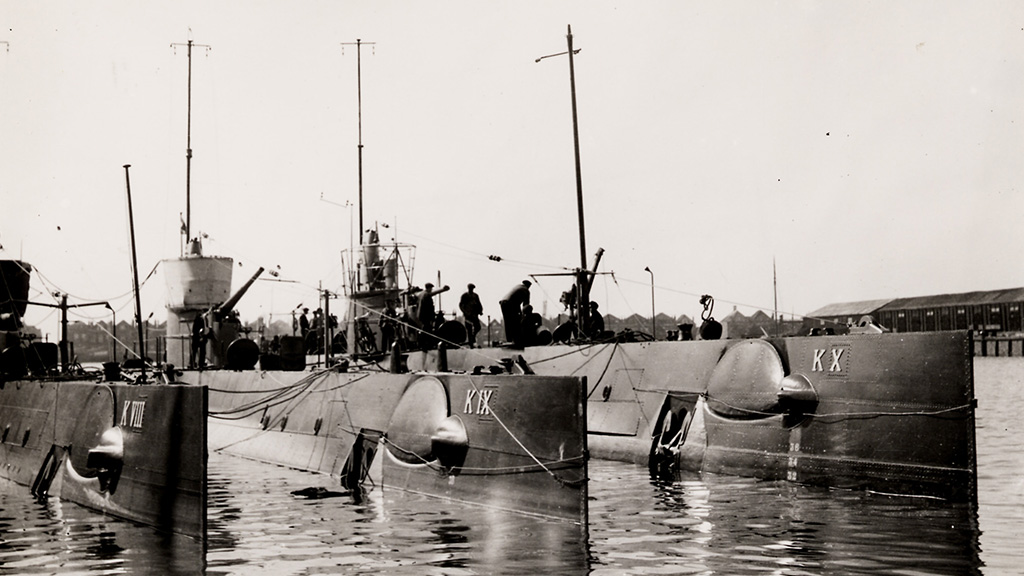 The three K VIII-class submarines, with HNLMS K IX in the centre.
The K IX was ordered from the Royal Schelde shipyard on 27 June 1917. After the keel was laid on 1 March 1919 in Vlissingen, the submarine was commissioned into the Royal Netherlands Navy on 21 June 1923. The 64.4-metre-long submarine departed Vlissingen on 28 February 1924 and sailed independently, without escort, via Portland, Plymouth, Seville, Tunis, Alexandria, Port Said, Suez, Aden, and Colombo to Sabang in the Dutch East Indies.
After years of loyal service in the region, the K IX was decommissioned in 1941. However, when Japanese forces rapidly advanced through Southeast Asia in early 1942, the submarine was hastily returned to operational service in March. Following the collapse of the Allied defensive lines in the Dutch East Indies, the submarine escaped to Australia, arriving in Fremantle, Western Australia, on 13 March 1942. From there, it continued to Sydney, where it narrowly survived the Japanese attack on the harbour.
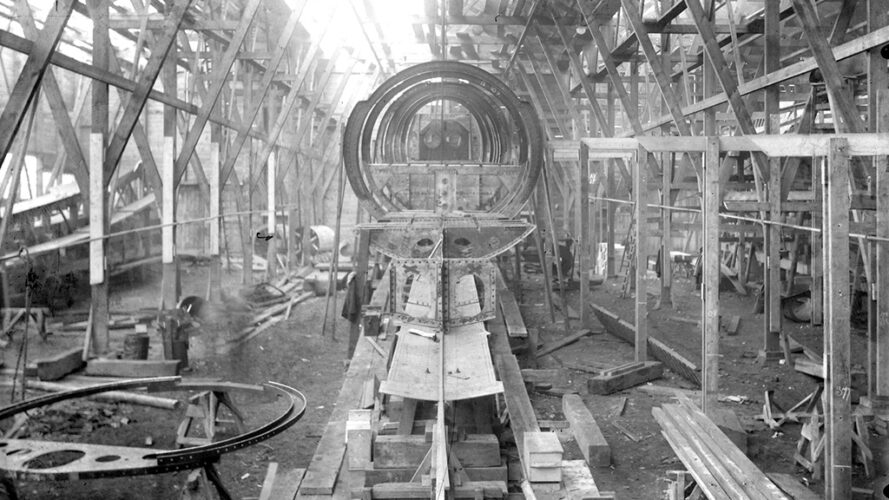
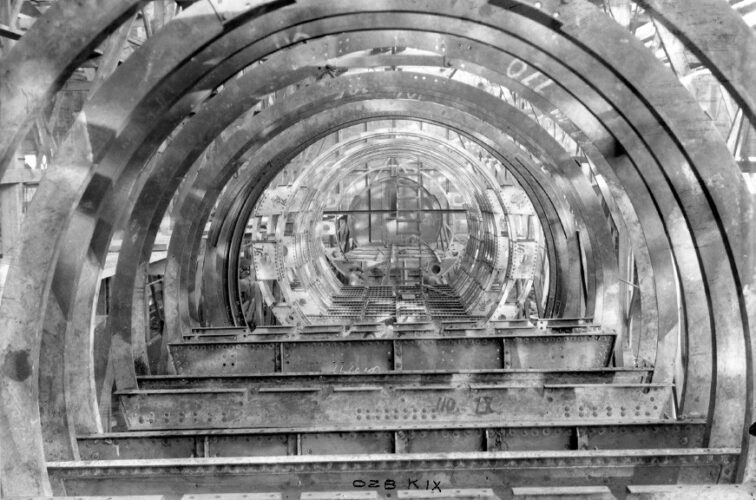
Construction of HNLMS K IX at the Schelde shipyard
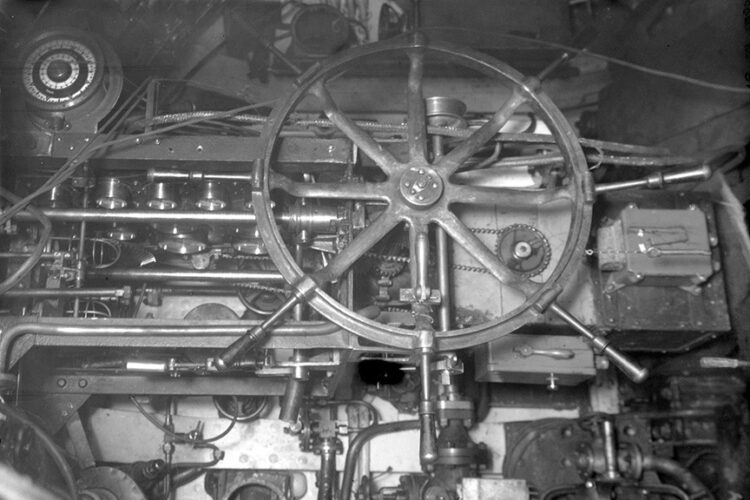
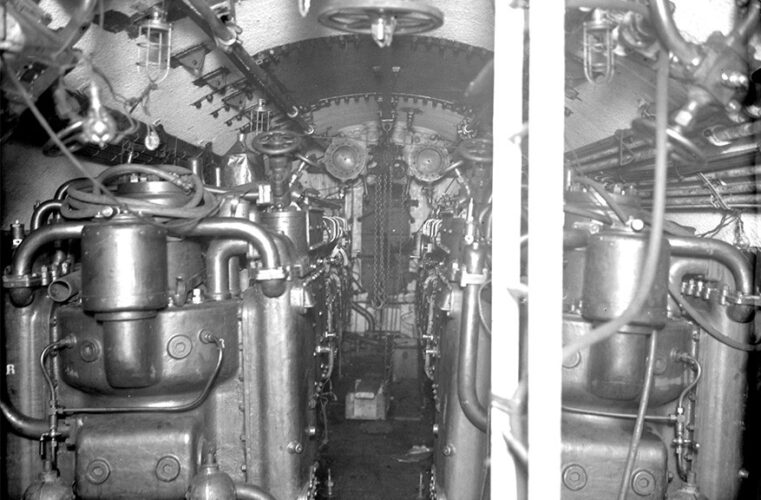
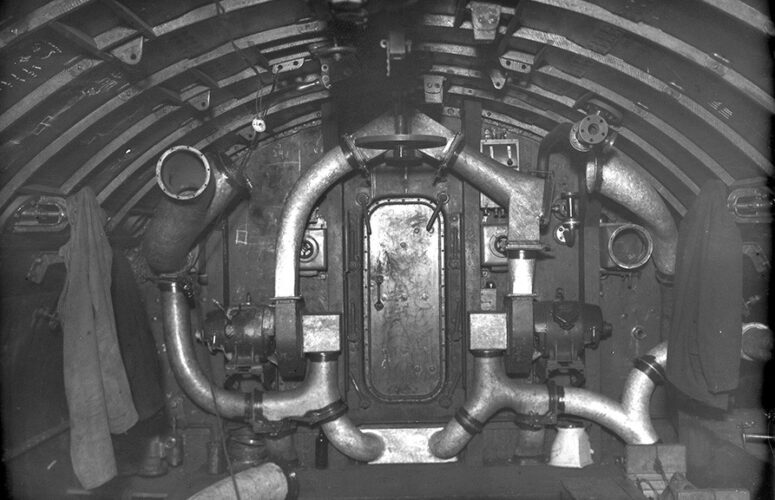
On 28 May 1942, a reconnaissance seaplane launched from the Japanese submarine I-21 flew over Sydney Harbour and identified thirteen Allied warships, including the K IX. During the night of 31 May to 1 June 1942, three Japanese mini-submarines were deployed in an attack. The primary target was the heavy cruiser USS Chicago, which was moored alongside the supply ship HMAS Kuttabul and the K IX.
One of the submarines fired two torpedoes, both of which missed the USS Chicago. One passed beneath the K IX and HMAS Kuttabul but struck the harbour wall where the Kuttabul was moored. The resulting shockwave caused the submarine to roll, lifted the diesel engines from their mounts, and damaged the aft batteries. The forward section of the submarine’s superstructure was also crushed when HMAS Kuttabul sank and collided with the K IX. The damage was extensive. On 1 June 1942, the K IX was towed away and underwent lengthy repairs at a nearby shipyard. To prevent information about Royal Netherlands Navy vessels operating in the southwestern Pacific from falling into Japanese hands, no mention was made of the K IX’s presence or damage.
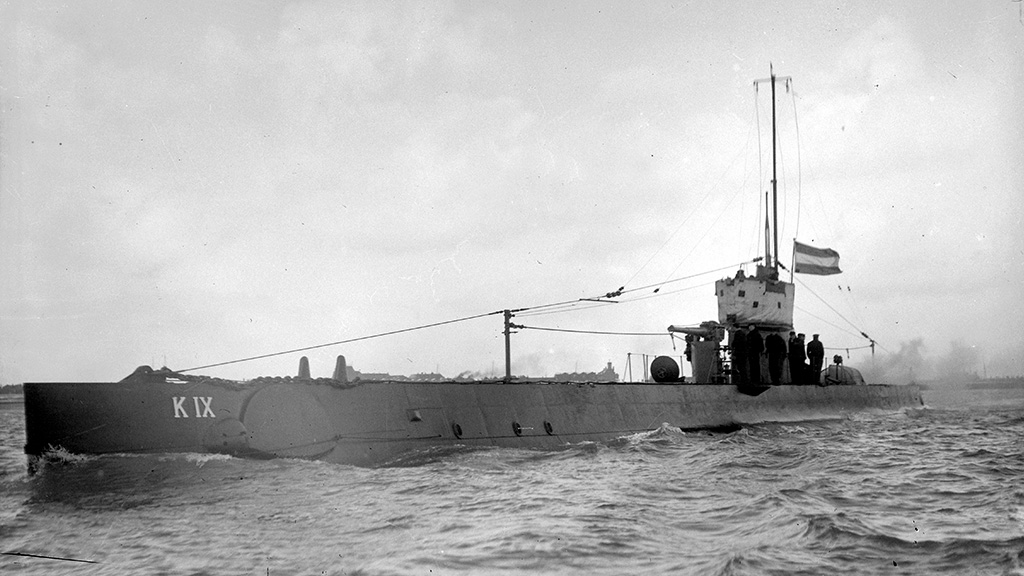 In 1924, HNLMS K IX sailed unescorted and under its own power to Sabang in the Dutch East Indies.
After the repairs were completed, the Dutch government offered the K IX to the Royal Australian Navy (RAN) for use in anti-submarine warfare training. On 22 June 1943, the submarine entered Australian service as HMAS K9. Despite her age and persistent mechanical problems, K9 played a valuable role as a training vessel for submarine warfare. She was the only submarine commissioned into the RAN during the Second World War and provided Australian crews with rare practical experience in detecting and tracking submarines at a time when such skills were urgently needed.
However, her operational usefulness remained limited. On 22 January 1944, an explosion in the battery caused significant further damage. With spare parts unavailable and the submarine already approaching the end of her service life, HMAS K9 was decommissioned on 31 March 1944, after spending only 31 days at sea during her time with the RAN.
The K9 returned to Dutch service as K IX, this time as an oil transport vessel. But misfortune continued to follow the submarine. While being towed from Sydney by the Dutch minesweeper HNLMS Abraham Crijnssen, the towing cable broke during the night of 7–8 June. The crew of the Abraham Crijnssen only noticed this at sunrise, by which time the K IX was no longer visible.
HNLMS K IX ran aground on Fiona Beach
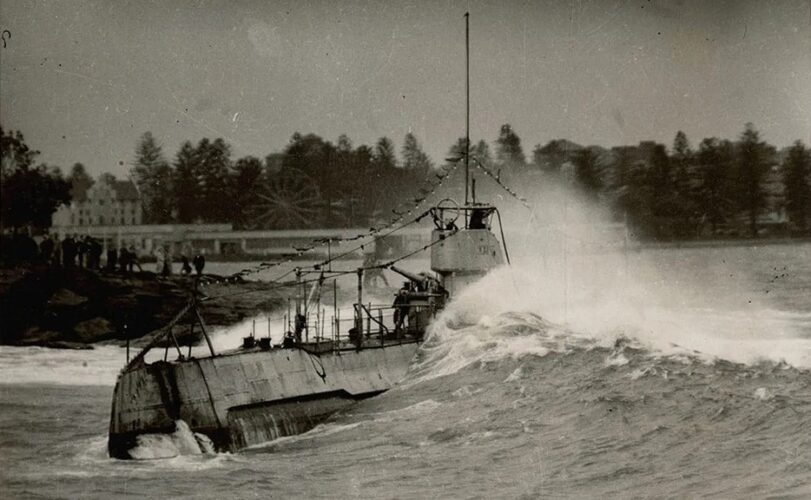
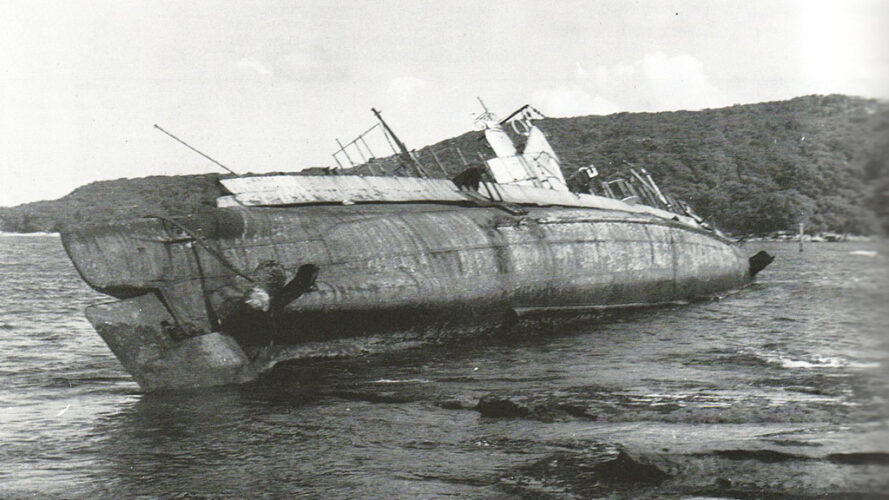
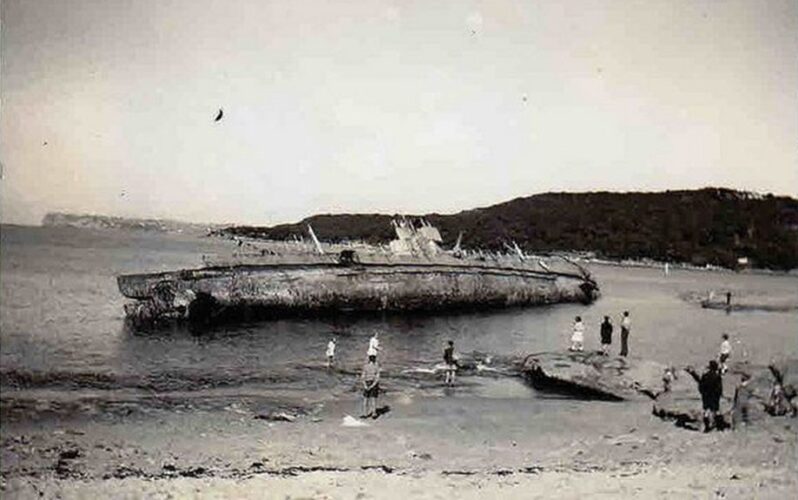
An aircraft was deployed to search for the submarine, and around 3:00 p.m. the K IX was spotted off the coast of Sugarloaf Point. The submarine had not yet run aground, but the search was abandoned as darkness approached. When the aircraft returned the following morning, the submarine was lying on the beach, which was then still called Fiona Beach. After an unsuccessful attempt by HNLMS Abraham Crijnssen to refloat the wreck, the Royal Netherlands Navy decided that the costs of another attempt were too high.
The Netherlands granted the Australian Commonwealth Disposals Commission permission to sell the stranded wreck as scrap. It was sold to two Australian engineers, Messrs Humphrey and Batt from Sydney, for a sum of 985.37 Australian pounds. Local residents had already begun removing the diesel engines by hand. The new owners removed the remaining fuel and valuable metals but left the hull behind because it was already buried too deeply beneath the sand to be moved.
The K IX became a tourist attraction, and in 1977 the beach was officially renamed Submarine Beach. In 1984, the wreck disappeared beneath the sand. The last time the submarine was visible was in 2001. During a severe storm, large amounts of sand were washed away, temporarily exposing parts of the hull. Soon afterwards, the wreck was covered by sand again, and it now awaits the next major storm.
Sources:
The Dutch Australian Cultural Centre
Dutchsubmarines.com
Van Gent, Tobias & Ron van Maanen, Luctor et Emergo: De onderzeeboten van de Koninklijke Maatschappij De Schelde 1905-1958, Middelburg: Het Boekenschap, 2018, pp. 62, 94-95.