
 Subscribe to the newsletter
The Royal Schelde shipyard is inextricably linked to Vlissingen and Zeeland. However, Schelde history can also be found outside the province. In this series, Schelde Schakels searches for those forgotten pieces of the past.
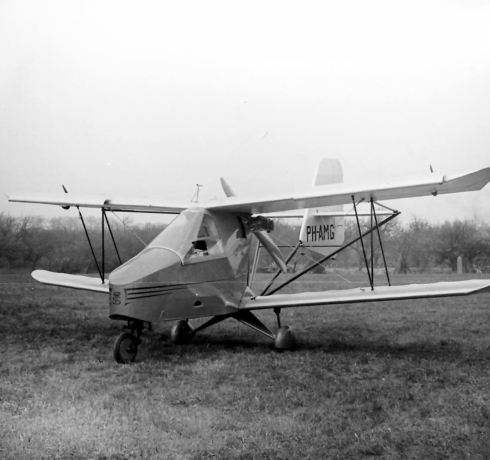
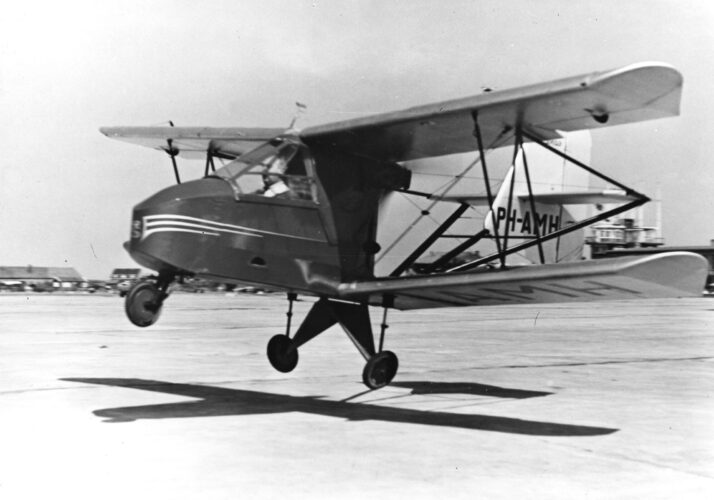
On Saturday 26 June 1937, the new Vlijt airfield on Texel was officially opened in a festive ceremony. To mark the occasion, a special guest arrived all the way from Vlissingen: the Scheldemusch. This small, single-seat aircraft was designed and built by the Royal Schelde shipyard. It was unique in many respects, not least because only six were ever built.
Text: Eefje Koppers
The first version of the Scheldemusch completed a successful test flight in 1935. The aircraft that visited Texel in 1937 was the fifth in the series, registered as PH-AMH. Its designer, Theo Slot, flew the little aircraft himself from Zeeland to the Wadden Islands, landing without difficulty at the newly constructed airfield. During the official opening, he gave a flying demonstration. The local newspaper Texelsche Courant reported on 30 June 1937 that he “manoeuvred it in all sorts of ways and appeared to have the aircraft completely under control”. It performed “the wildest aerobatics” and behaved like a “coquettish young lady”.
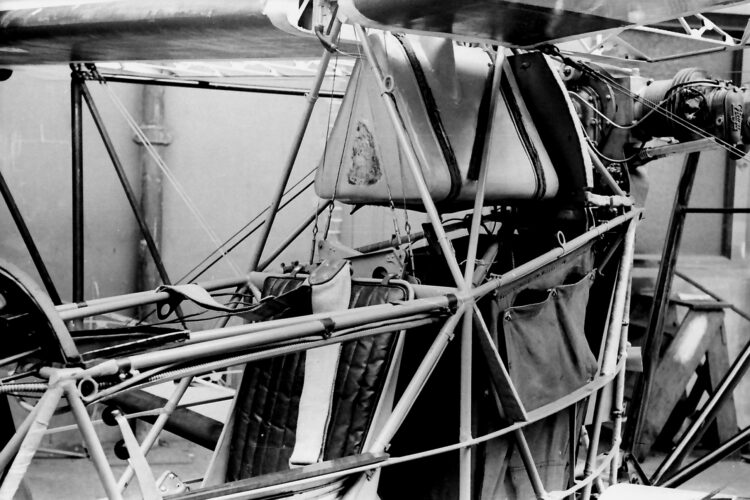
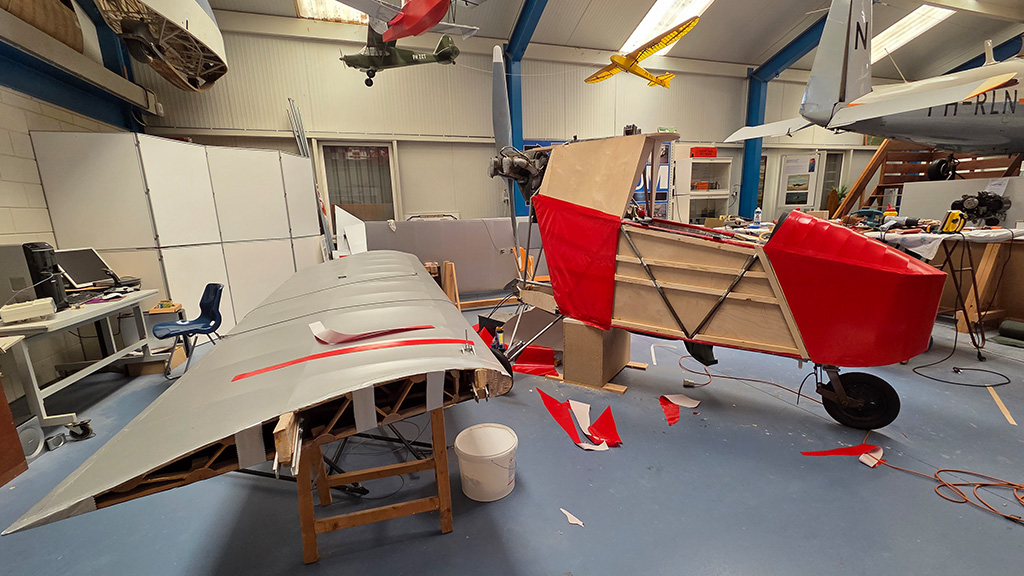 The Texel Aviation & War Museum has a workshop where a replica of the Scheldemusch is being built.
The successful demonstration marked the beginning of a long-standing relationship between Texel and the Scheldemusch, one that continues to this day. Volunteers at the Texel Aviation & War Museum, located beside the airfield’s runway, are currently building a replica of the little aircraft. A workshop has been set up inside the museum, where the replica is gradually taking shape.
From shipbuilding to aircraft manufacturing
How did a shipyard come to focus on aircraft manufacturing? The answer lies in the Great Depression of the 1930s. Following the sudden collapse of stock prices on Wall Street, a global economic crisis took hold. The Schelde was hit hard. In 1929, the company employed more than 2,750 people; within two years, that number had fallen to 872. With no new ships being ordered, the company needed to explore other markets.
The German shipyard Blohm & Voss and the British shipbuilder Harland & Wolff had demonstrated that combining shipbuilding and aircraft manufacturing could be successful. In late 1934, De Schelde therefore acquired the equipment and aircraft division of the bankrupt H. Pander & Zonen aircraft manufacturer in The Hague. The acquisition also brought designer Theo Slot to De Schelde. He had established a reputation at Pander for his successful designs and brought that expertise with him to Vlissingen.
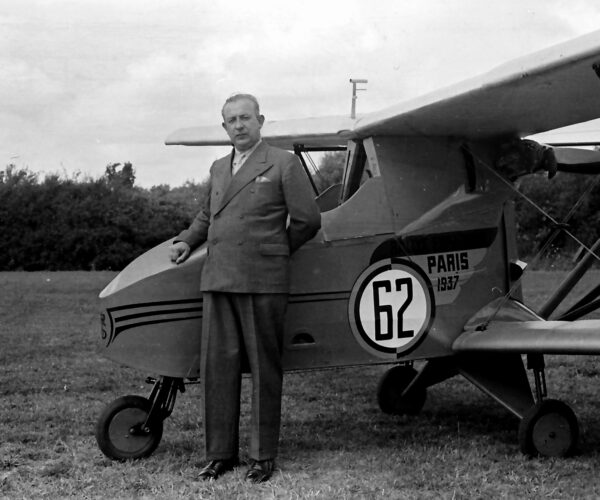 Scheldemusch designer Theo Slot.
With the Scheldemusch, De Schelde aimed to enter a new market by designing simpler aircraft for a wider audience. The aircraft offered an attractive investment for several kinds of customer. It was relatively affordable for private recreational pilots and, thanks to its design, comparatively easy to operate.
Flight schools could use it for training, while aviation innovators could use it to test new technologies that might later be applied to larger aircraft.
A promising design
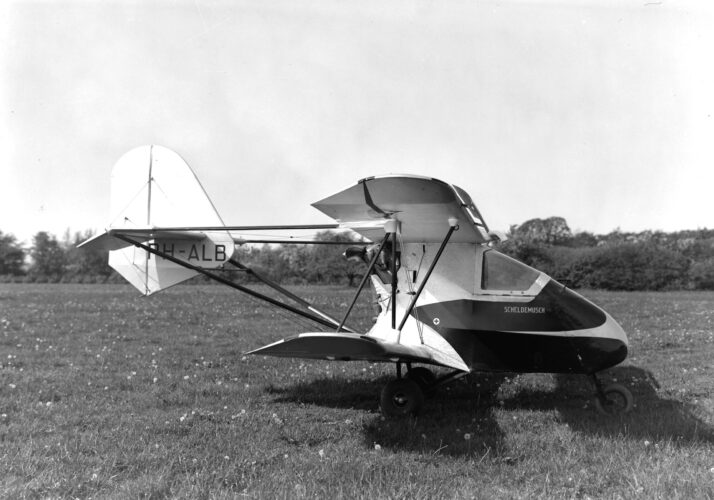
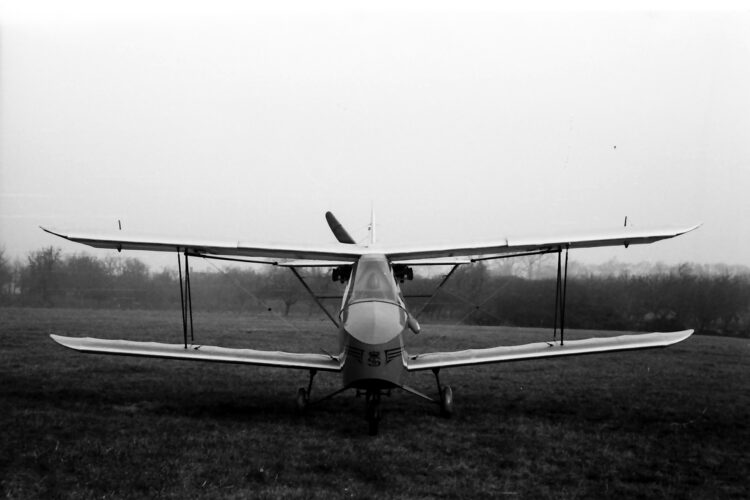
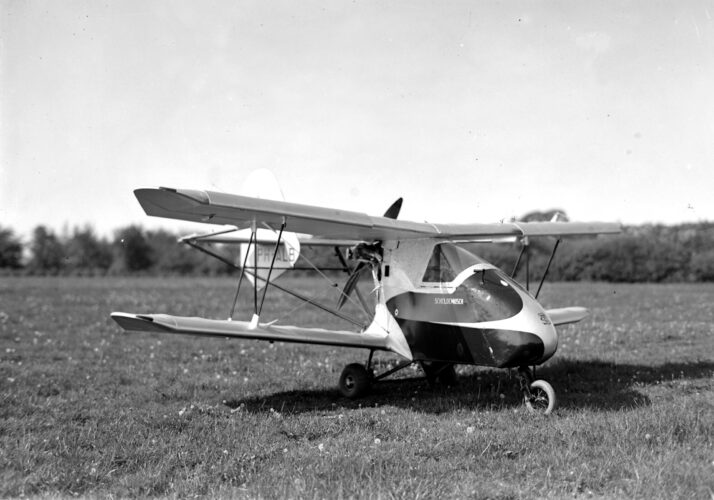
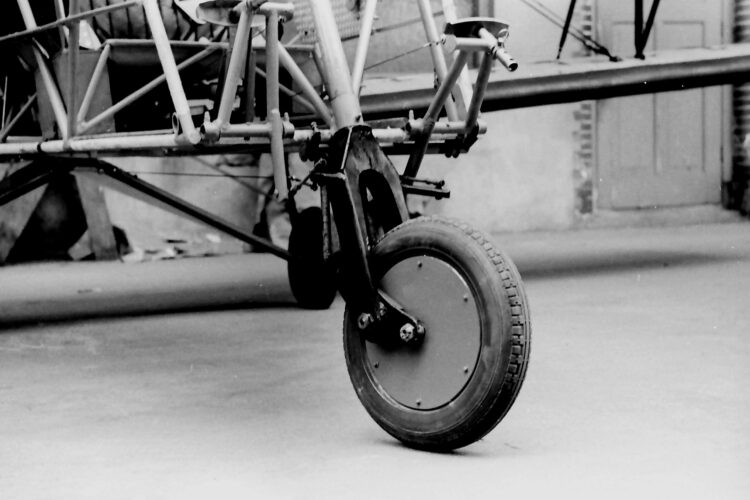
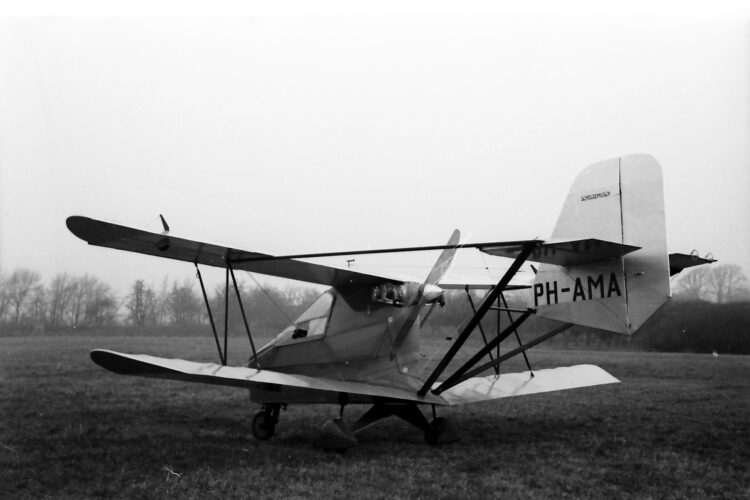
The Scheldemusch was a biplane constructed from steel tubing, wood and fabric. Its wings were made of wood covered with fabric. It was the first Dutch-built aircraft to feature what is known as tricycle landing gear: two main wheels beneath the wings and a steerable nose wheel beneath the front of the aircraft. Until the 1950s, most aircraft used conventional landing gear, with two main wheels beneath the wings and a smaller wheel beneath the tail. The steerable nose wheel made taxiing, take-off and landing easier, which is why this configuration is now the most common.
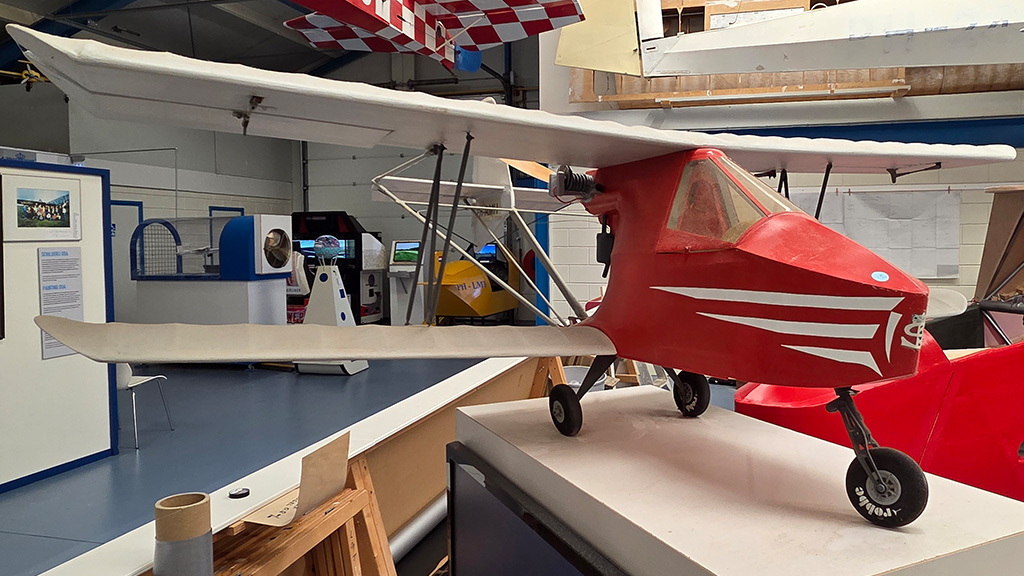 Also on display at the museum: a working scale model of the PH-AMH built by the German model-maker Jürgen Wolf.
Theo Slot’s demonstrations showed just how promising the Scheldemusch was. The aircraft attracted considerable publicity and received positive reactions from across Europe. Its biggest drawback was that it could carry only one person. The Schelde therefore continued developing two-seat versions. However, the Scheldemusch was also a victim of its time. In 1937, the future of both the aircraft and the Schelde’s aviation activities looked bright. Just a few years later, the Second World War broke out, changing everything.
In the end, only six Scheldemusches were built: the PH-ALB, the PH-AMA, the PH-AME, the PH-AMG, the PH-AMH and the PH-AMI. The PH-AMH was destroyed during the hostilities of 10 May 1940. Of the remaining five, four were lost in crashes or scrapped, whilst the PH-AMG was taken to England, where it was last seen in 1960.
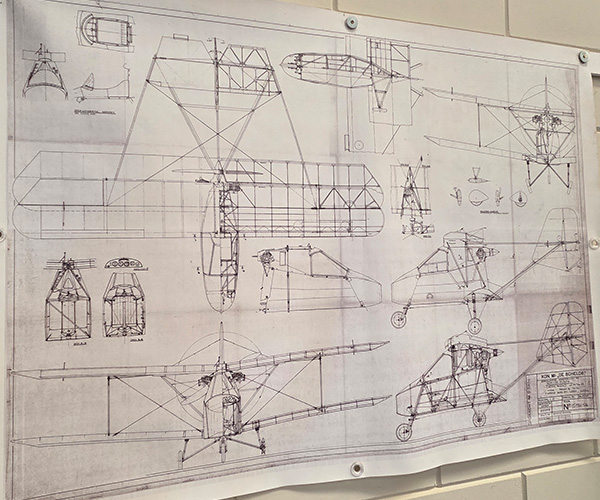 The detailed assembly drawing of the Scheldemusch from the Schelde archives is being used for the replica.
Keeping the Scheldemusch alive
The Scheldemusch can still be admired on Texel today, and work on the replica is progressing. During a visit in June, the volunteers were working on the wings. The museum’s collection also includes a working scale model of the PH-AMH. It was built by German model-maker Jürgen Wolf and donated to the museum in 2004. Visitors can also see a smaller model of the very first Scheldemusch, registered as PH-ALB in 1935. If you ever find yourself on Texel, the museum is well worth a visit, if only to wonder at this fascinating piece of Schelde history being brought to life.
Sources:
Van Wijngaarden, Pieter, NV Koninklijke Maatschappij De Schelde Afdeling Vliegtuigbouw, Eygelshoven: Uitgeverij Wiel Eijdems, 2014, pp. 22–35.
Van Wijngaarden, Pieter, Naval Excellence, 150 Years Royal Schelde, Vlissingen: Wilco BV, 2025, pp. 217–222.
Texelsche Courant, Opening Vliegveld – Demonstraties, 30 June 1937, p. 3.
Texelse Courant, Model historisch vliegtuig voor museum, 11 June 2004, p. 6.