
 Subscribe to the newsletter
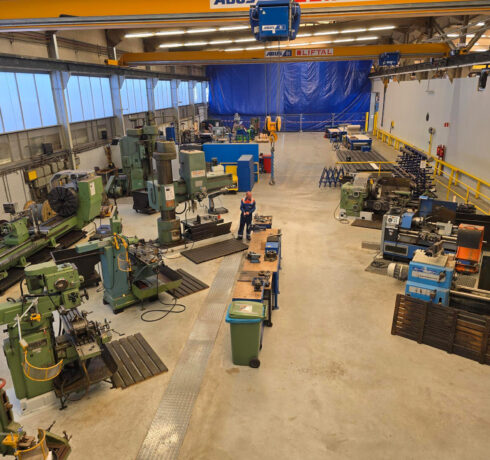
Damen Shiprepair Vlissingen (DSV) has completed a series of major infrastructure upgrades across its premises, ranging from sustainability initiatives and production equipment to employee facilities, security systems and operational reliability. The investments support DSV’s ability to execute increasingly large and complex projects while creating a safer, more efficient and attractive working environment for employees, customers, and subcontractors alike.
Text: Tom Scott
For Robin Juranek, Manager Production at DSV, continuous investment is about much more than simply maintaining facilities. “A company that keeps investing also gives a sense of security to its personnel,” he says. “When you continue to renew and improve, you stay at the forefront of the market. It allows you to distinguish yourself from the competition and shows both employees and customers that you are committed to the future.”
The yard infrastructure upgrades discussed below have involved the input of every department at DSV. “This has been a joint effort by everyone here: from the dock and harbour transport teams to the people working in the canteen,” Robin adds.
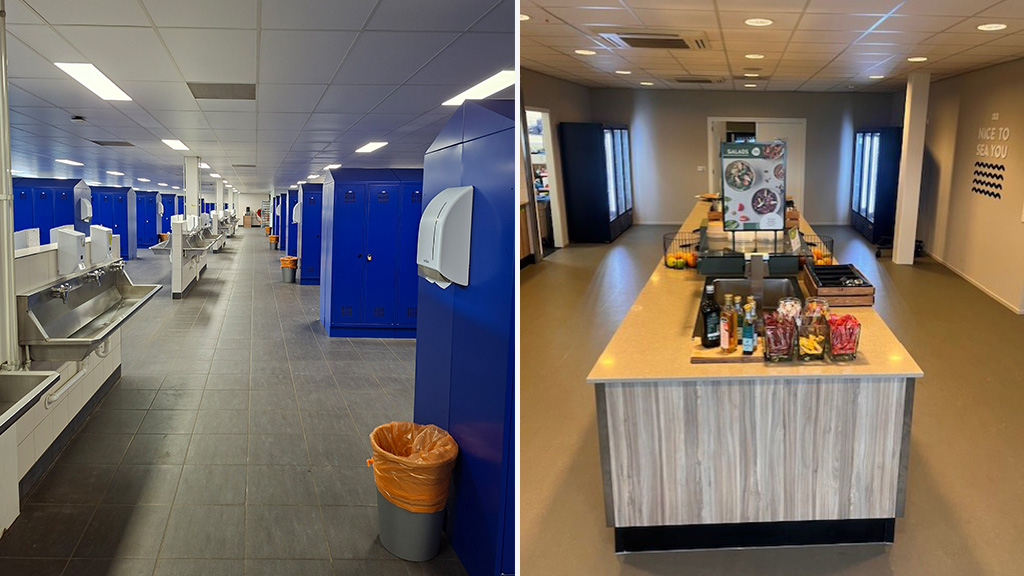 DSV has upgraded the employee washing and changing facilities, as well as the canteen and kitchen.
Supporting larger and more complex projects
The investments come at a time when DSV is handling increasingly substantial projects, such as the outfitting of the Research Expedition Vessel REV Ocean and national naval programmes like the maintenance of the HNLMS Karel Doorman. “The nature of our work is changing,” Robin explains. “We are seeing fewer traditional repair projects and a greater number of large-scale conversion, outfitting, and naval projects. These bring different logistical challenges and often require facilities with upgraded standards.”
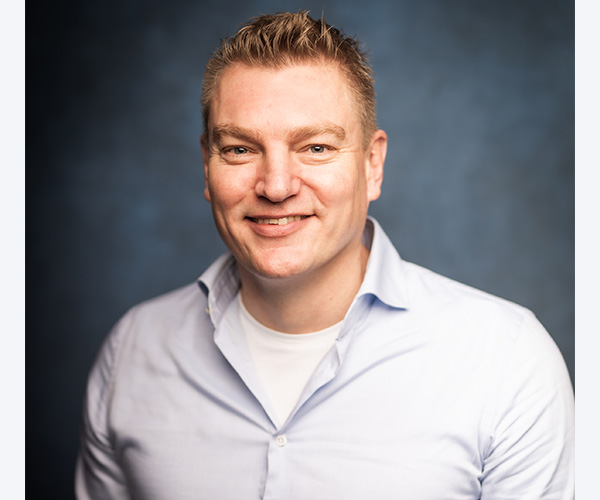 Robin Juranek, Manager Production at DSV.
One area where this shift in project scope is visible is the yard’s waste collection facilities, which now better align with current requirements. “The previous layout was logical for the projects we worked on, but our waste streams have changed significantly. Large outfitting projects generate significant amounts of packaging materials such as cardboard, plastics and wrapping films. To sort these streams more efficiently and sustainably, we needed a different setup with a new layout and improved logistics.” Moreover, the upgraded facility supports Damen’s sustainability ambitions while helping DSV improve waste separation and recycling performance.
Another upgrade driven by larger and more complex projects is the yard’s expanded warehouse capacity. “Our clients increasingly require temporary storage space for equipment and materials awaiting installation. We can now offer larger storage facilities, including climate-controlled areas where required,” says Robin.
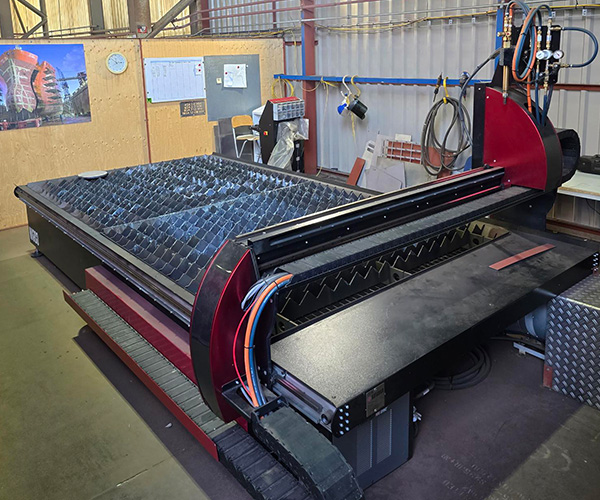 DSV’s new steel cutting table uses plasma and oxy-fuel cutting techniques.
Optimising production
The yard’s production areas have also received attention in the recent series of infrastructure investments. DSV has purchased a new hands-on steel cutting table that significantly expands in-house manufacturing capabilities. Unlike the previous system, which relied solely on oxy-fuel cutting and physical templates, the new machine supports both plasma and oxy-fuel cutting. This means that now, in addition to steel, both stainless steel and aluminium can be cut directly from digital drawings. “Drawings can now be programmed directly into the machine,” Robin explains. “It is faster, more flexible and much more efficient.”
In the machine workshop, where much of the yard’s mechanical work takes place, the floor has undergone a complete renewal. Over the years, the previous floor had become uneven, with potential trip hazards, making it “not optimal for modern workshop activities.” The upgrade turned out to be more challenging than expected because of various modifications that had been made throughout the yard’s history. Robin: “There were quite a few surprises beneath the surface, but the result is a smooth, durable, and liquid-resistant floor that improves both safety and usability.”
Ensuring reliability in both dry-docks
One of the less visible – but quite possibly the most critical – upgrades has been the renewal of the control systems of the winches responsible for opening and closing the dry-dock doors. The existing systems were already 60 years old and had, from a reliability perspective, become vulnerable. “Our dry-docks are our core business. So, without operational dock doors, we cannot serve our customers,” Robin notes. As such, the upgraded systems will ensure safe and dependable operation of the dry-dock doors for years to come.
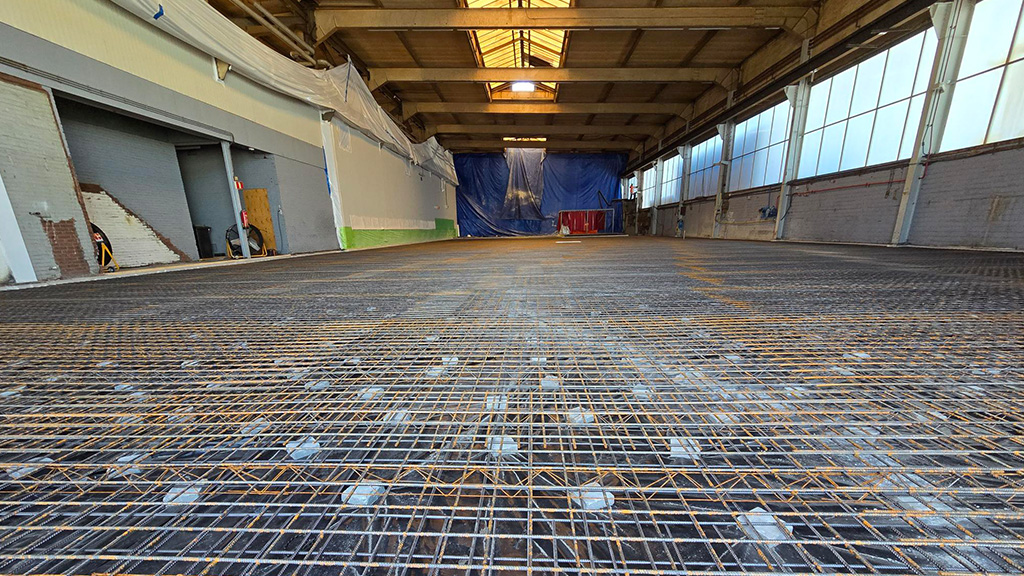 The floor of the machine workshop has been renewed. The result is a smooth, durable and liquid-resistant floor.
Security has also been a major focus area. In response to changing ISPS (International Ship and Port Facility Security) and ABRO (former ABDO) requirements and increasing customer demands, DSV has invested heavily in security at the yard. “For many of our clients, security requirements are becoming increasingly stringent,” says Robin. “The investments we have made demonstrate to our customers that we take security extremely serious.”
The human aspect
The final two infrastructure upgrades illustrate the fact that “not everything has a direct return on investment”. Instead, says Robin, “Some investments pay back on a human level. Providing people with a pleasant environment is one of them.”
He is referring to the complete renovation of DSV’s kitchen and canteen facilities. After serving the yard for more than twenty years, the previous facilities no longer matched the needs of a modern workforce. “The canteen is much more than a place to eat,” Robin explains. “It is a meeting place where colleagues, customers, and subcontractors come together. It is an important part of daily life at the yard.”
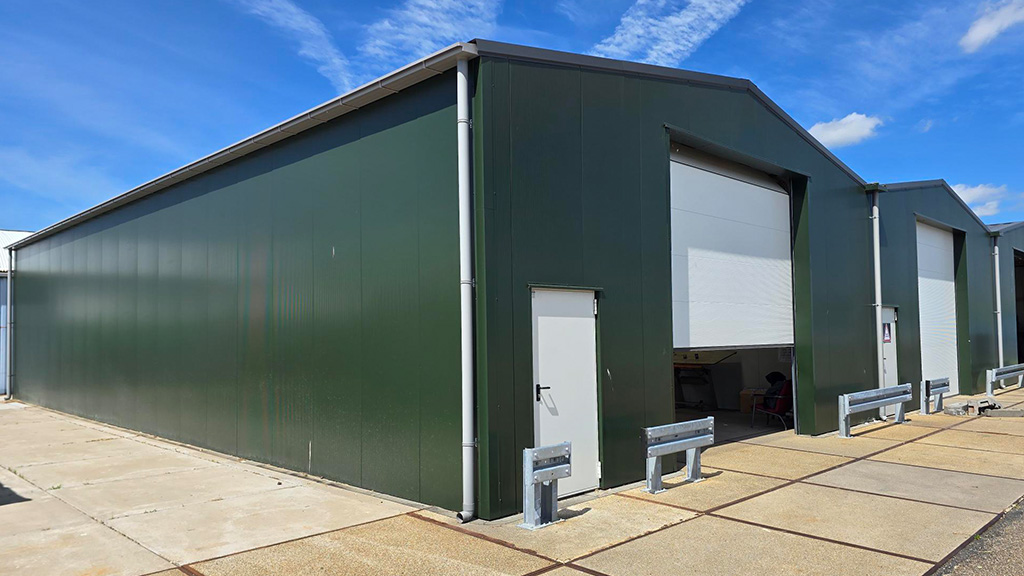 DSV recently expanded warehouse capacity for its clients.
Employee welfare was also a key consideration in the renewal of the washing and changing facilities, incorporating much improved comfort for employees. The upgraded facilities now provide multiple lockers per person for work clothing, equipment and safety gear. “We ask a lot from our people in their work,” says Robin. “So, whether it’s a modern canteen, clean overalls or good changing facilities, we believe it’s important to provide something in return.”
Continuous improvement
While many of these projects have now been completed, Robin points to the diversity of these investments. “Some of the upgrades have been about sustainability, others improve safety, security, efficiency or employee wellbeing. And together they strengthen our position as a yard and help us support increasingly demanding projects.”
Walking through the yard today, Robin is happy with what has been achieved. “When I see what we have done over the past few years, I’m very proud of the results. These improvements benefit our customers, our employees and everyone who works at the yard.”