
 Subscribe to the newsletter
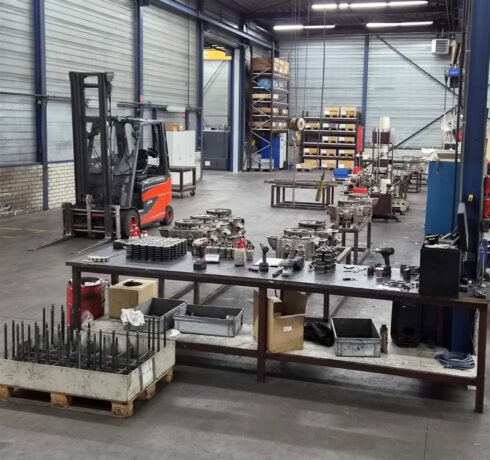
Earlier this year, Schelde Schakels introduced Schelde Engine Services (SES) and looked at how the former Lafaut Engineering became part of Damen Schelde Marine Services (DSMS). This time, we take a closer look at the company itself: the people, the expertise and, most importantly, the work they do on board ships.
Text: Tom Scott
SES currently has a team of eight people: four technical engineers, a workshop manager, a commercial account manager, and the two former owners of Lafaut Engineering, who remain involved as technical consultants.
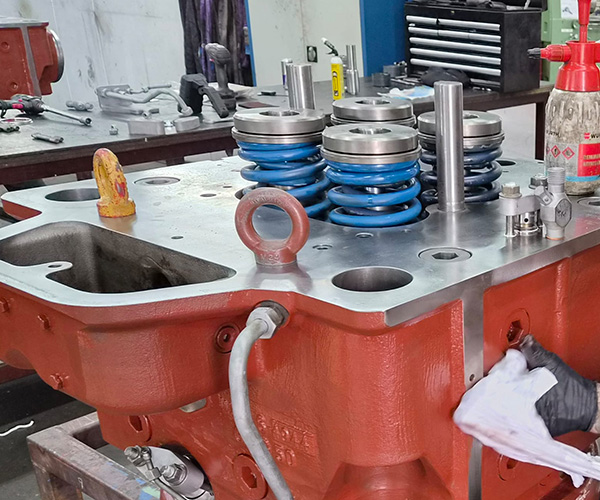 Schelde Engine Services specialises in two-stroke and four-stroke engines.
On board is where it happens
The team’s expertise encompasses four-stroke and two-stroke engines, with experience across several brands including MAN and Wärtsilä. Although SES has workshop facilities, the main focus is very much on board. “The workshop supports the onboard work,” explains Commercial Account Manager Dennis de Groot. “We go on board and, when there is work that cannot be done on the ship, we bring the components back to the workshop.” The work itself ranges from planned maintenance and repairs to solving unexpected problems.
The team works mainly in the ARA (Amsterdam–Rotterdam–Antwerp) region, but can travel worldwide when required. For larger jobs, SES can also scale up by working with trusted partners under its supervision.
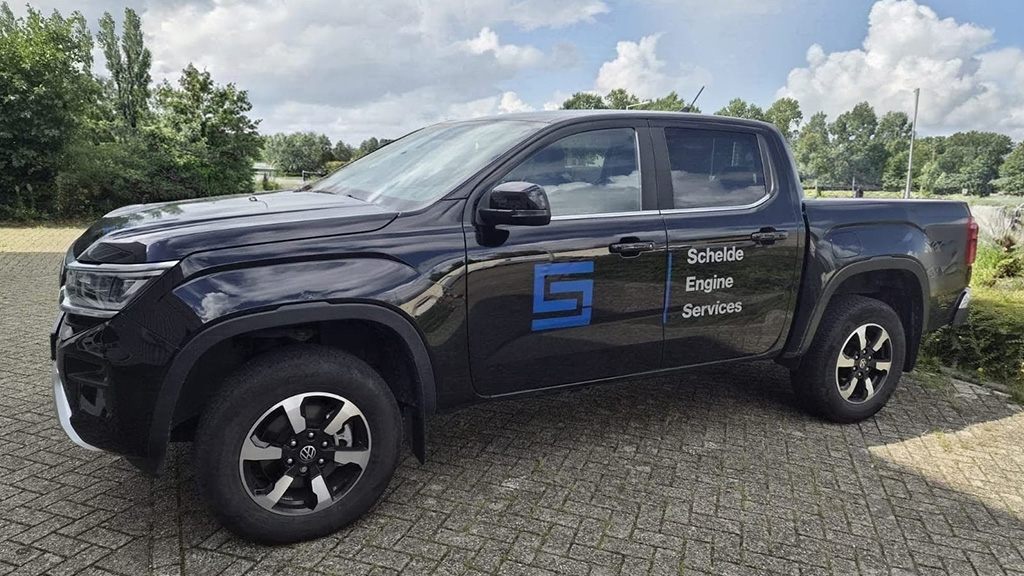 The Schelde Engine Services team works mainly in the ARA region, but can travel worldwide when required.
A complete maintenance cycle
The work of SES fits neatly into the wider DSMS organisation; one service job can involve multiple subsidiaries. “The different activities and different companies may have their own names: SES engineers going on board, DSMS supplying the spare parts, Maritime Logistics handling transport, and the workshop here or in ‘s-Gravendeel carrying out reconditioning, but we can work together as one coordinated and connected service for the customer,” says Dennis.
A good example of what this looks like in practice was the full overhaul of Sulzer ZAV40S engine on board the Fred Olsen Cruise Lines-owned vessel Borealis, where components were removed on board, transported to the workshop for reconditioning and then returned to the ship for installation.
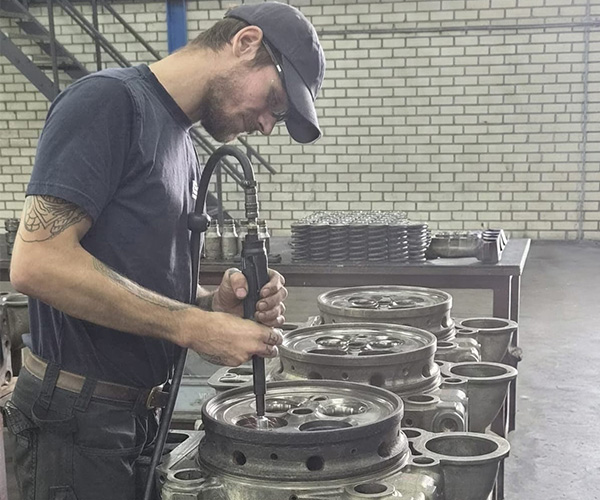 Work that cannot be done onboard the vessel is carried out in the workshop.
Another area of potential growth is working with customers on a more continuous basis, for example supporting an entire fleet and regularly rotating components through the workshop.
This combined approach is where the future of SES lies. “We are going to develop a lot in the future. Especially in terms of number of engineers and the scope of the work we carry out, we definitely have ambitions for growth. SES has only recently become part of DSMS, but the people, and their expertise, are already firmly in place,” concludes Dennis.