 Subscribe to the newsletter
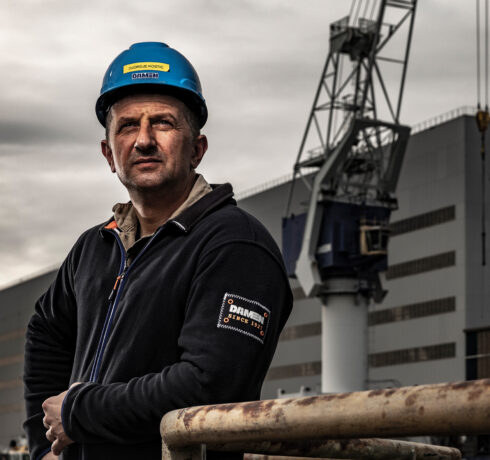
A Works Council (OR) represents all employees of a company. Earlier this year, the elections for the new Works Council took place at Damen Shiprepair Vlissingen (DSV). Just like last time, the entire process was organised transparently and independently by Wie kies jij, ensuring the elections once again ran smoothly and carefully. A new Works Council of seven members has now been formed: Ad Peters, Tony de Graaf, Raymond Roos, Laurens Bodrij, Valter Pereira, Tonci Bozic, and Djordje Kostic. In addition to a number of statutory duties, signals and questions from within DSV are an important part of the Works Council’s agenda. In this interview, Works Council chair Djordje Kostic talks about the focus points from the previous term and the priorities for the coming period.
How was the previous term for you as Works Council chair?
It was a lively and educational period, especially because the previous Works Council included a good mix of colleagues from different departments. Everyone brought their own perspective, which at times added great value, but also sometimes made the decision-making process more complicated. We regularly had intense discussions, which I generally saw as a healthy and democratic part of our work. Occasionally, a vote was needed to reach a decision.
You have to be willing to really dive into the topics and contribute actively so you can be a full-fledged discussion partner on behalf of your constituents. That’s something I continue to consider very important.
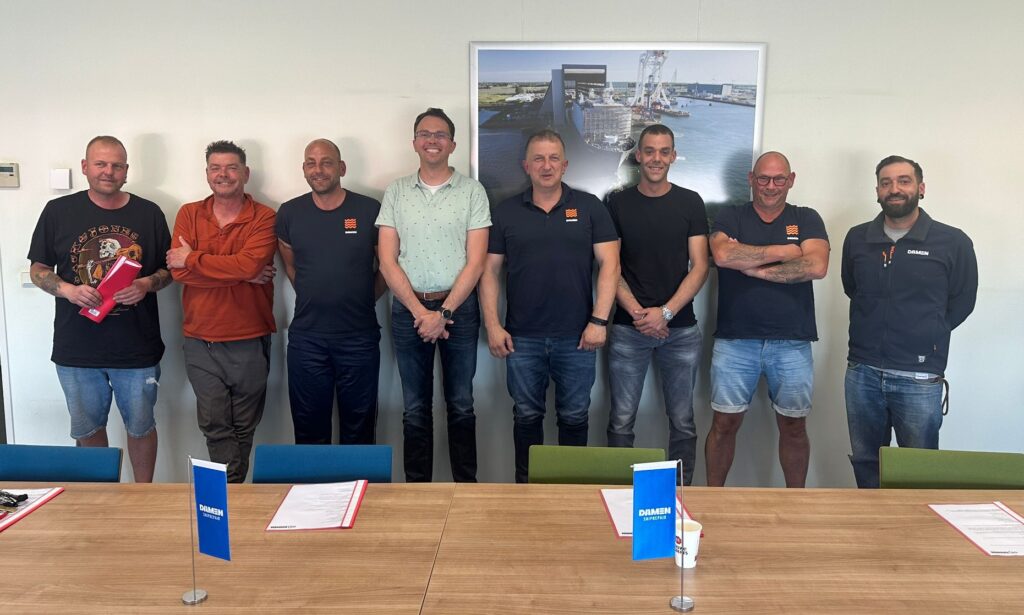 The new OR (from left): Tony de Graaf, Raymond Roos, Laurens Bodrij, Managing Director Michiel de Vliegher, Djordje Kostic, Tonci Bozic, Ad Peters, and Valter Pereira.
What topics did the Works Council work on in the past period?
One important file was the introduction of a skills and knowledge assessment matrix, a proposal from management. Because this required Works Council approval, we reviewed it thoroughly. In addition to our own analysis, we also had it assessed by an external lawyer. The matrix is now in use.
We also provided input on various topics such as investments, procedures, measures to make the company more attractive on the job market, the progress of ongoing projects, and even proposals regarding dress code. In short, we engaged broadly with topics that affect both employees and the organisation.
And now there is a new Works Council. How are the roles divided?
I am still the chair, although that was only made official after the first meeting with the newly elected Works Council. Since I was the only member re-elected, we reassigned the roles during that first meeting. The Works Council unanimously decided that I would continue as chair, and colleague Ad Peters has taken on the role of secretary.
Which topics do you want to work on in the future?
In the coming period, I mainly want to focus on the further development of the Works Council itself: increasing awareness of why the Works Council is important, what our role entails exactly, and how we can become a stronger team.
Additionally, I find it important to continue showing our director that the Works Council is a valuable and engaged partner in ensuring the company functions well. I also want to remain attentive to critical signals from within the organisation. These exist in every company, and colleagues must know they can come to the Works Council with their concerns or questions. My goal is to take that input seriously and, where possible, find solutions – whether within the Works Council itself or together with the director. Since the new Works Council consists mainly of production employees, maintaining good contact with our so-called office staff remains a very important task for me.
"A strong Works Council monitors developments critically and looks ahead in a rapidly changing market. While we work on increasingly complex projects, the Works Council safeguards the impact on employees. " Djordje Kostic
In general, why does a company need a well-functioning Works Council? And why is it important for employees?
I often say: ‘A good director always listens to a good Works Council’. And in practice, this truly proves to be the case. In the past term, I found that our director was always willing to engage in conversation—not only for formal matters, but also when we strongly disagreed on content. That open communication is crucial.
Of course, every good director takes employees into account, but some issues are unintentionally overlooked: generational differences, digitalisation, and the challenges faced by colleagues who are less familiar with new technology. Younger employees adapt naturally, while the experience of older colleagues remains valuable. It’s good that our organisation invests in this and that the Works Council is an equal partner in the process.
A strong Works Council monitors developments critically and looks ahead in a rapidly changing market. While we work on increasingly complex projects, the Works Council safeguards the impact on employees. This ensures continued attention to workload, multidisciplinary tasks, and a healthy, future-proof organisation.
Finally, what do you consider most important in the role of the Works Council?
I believe employee participation works when we remain open, honest and engaged – towards both the director and colleagues. A Works Council should be firmly rooted within the organisation: critical, responsible and focused on a healthy, safe and future-proof working environment. I stand for an approachable Works Council that listens, dares to ask questions, and is there for employees. Together with my colleagues, I am committed to transparent cooperation with management and decisions that do justice to everyone’s interests.
Text: Tom Scott