
 Subscribe to the newsletter
The Royal Schelde shipyard is inextricably linked with Vlissingen and Zeeland. But there is also plenty of Schelde history to be found outside the province. In this new series, Schelde Schakels goes in search of those pieces of the past.
Text: Eefje Koppers
Anyone who visits Haarlem can go and see the Crossleystraat. It is located in the relatively new residential district De Remise in Haarlem, situated on the former site of the First Dutch Electric Tram Company workshop and later Connexxion. The street names recall illustrious buses and trams, such as Bolramerstraat, Leylandstraat, Blauwe Tramstraat, Crossleystraat, and Remiseplantsoen.
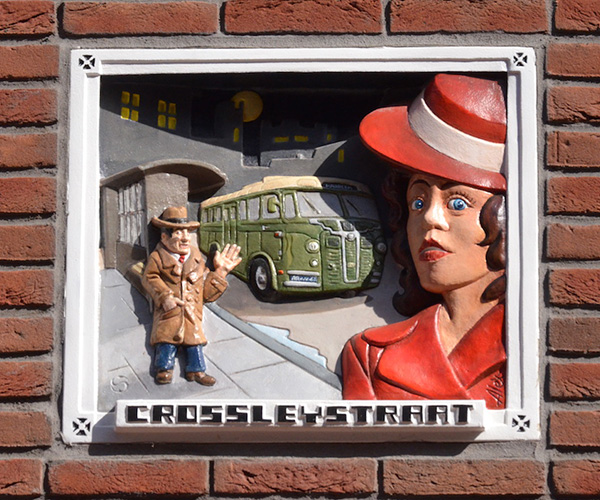 The façade stone in Crossleystraat.
In addition to a street sign, each street has also been given a special decorative façade stone. The stones were designed by comic artists and brought to life by craftsmen. The façade stone on Crossleystraat was designed by Haarlem comic artist Alex van Koten and carved by sculptor Serge van Druten from Leusden Zuid. The stone shows Van Koten’s comic hero Nick Name, together with a lady in red and a Crossley bus.
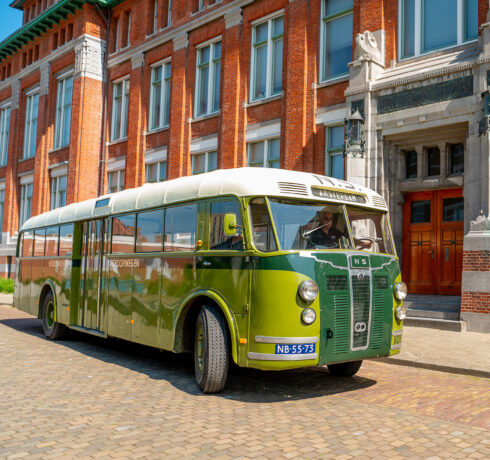
And that Crossley bus forms a small but interesting part of 150 years of Schelde history. Immediately after the Second World War, the Netherlands faced the enormous challenge of rebuilding the country. In the case of the Dutch railway system (NS), this meant that public transport also had to get back up and running to take people to and from work. The railway lines had suffered heavy damage, so NS chose to deploy buses as a temporary solution. The company ordered 925 bus chassis from the English company Crossley Motors. These were delivered in 1947 and 1948, and NS commissioned various suppliers to build the bodies. One of them, coachbuilder Verheul from Waddinxveen, outsourced the construction of 185 bus bodies to the Schelde.
Before the Second World War, the Schelde had begun building aircraft and aircraft factories had been opened in Dordrecht and Zwijndrecht. Just after the war there weren’t many orders for aircraft construction, but there was enormous demand for buses as replacement transport while the railway lines were being repaired. The bodywork or superstructure of a bus did not differ greatly from that of an aircraft fuselage, and so the Schelde expanded its activities into bus construction for the postwar reconstruction. In total, the Schelde built nearly 400 light-metal buses, including the 185 Crossley bodies.
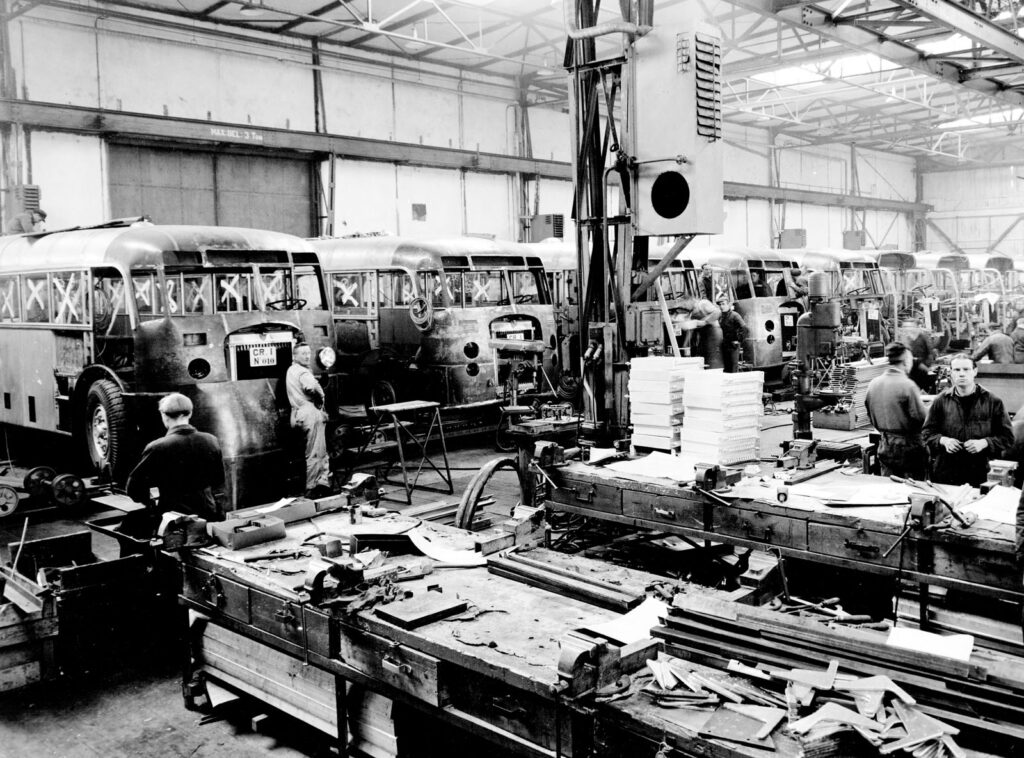 The Crossley bus production line in the Aircraft Construction Department in Dordrecht.
The buses were used for NS rail replacement bus services. Moreover, they were later distributed among regional transport companies throughout the Netherlands. Despite some problems with the blowers of the diesel engines, the Crossley buses were popular and for years defined the image of the Dutch regional bus. The last Crossleys in the Netherlands were taken out of service in 1965. However, a number have been preserved, including a Crossley SD42/1 bus number 1108 with an aluminium body built by the Schelde.
The 1108 first ran for NS and later with various regional transport companies, including in Gelderland and Utrecht. In 1955 the bus was converted into a so-called “schermbeeldwagen” to be used for X-ray examinations of staff at NS subsidiaries. In 1970, NS donated the bus to the Stichting Veteraan Autobussen (a foundation that preserves historic Dutch buses), which restored it to its original condition. In honour of the 150th anniversary of the Royal Schelde shipyard, the bus made a special visit to Vlissingen for the jubilee celebration last summer.
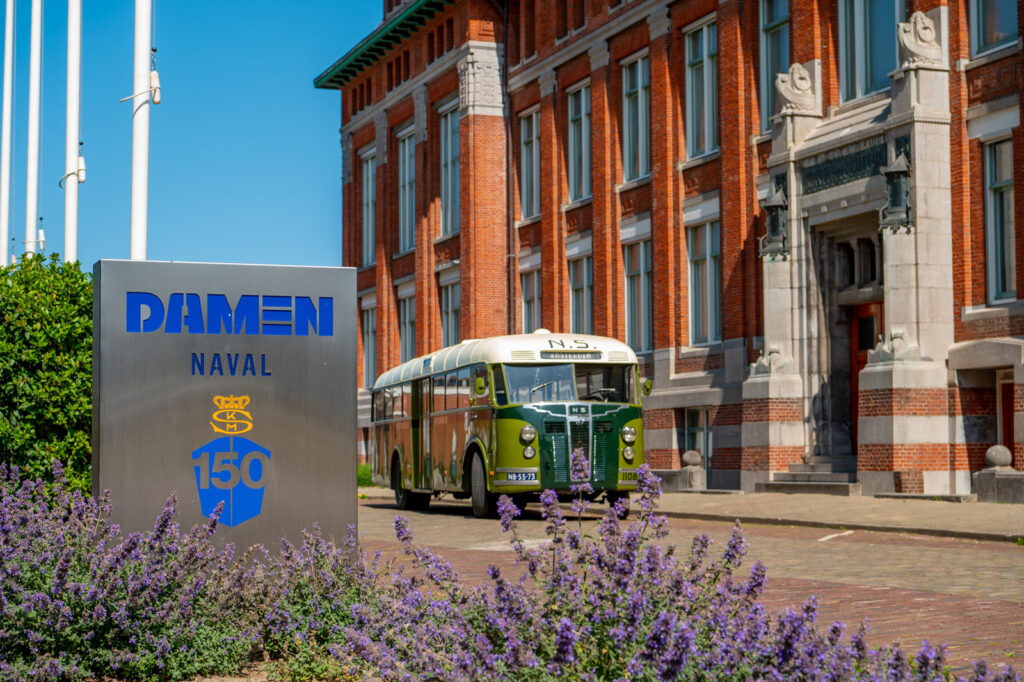 In June 2025, a Crossley bus featuring an aluminium body supplied by De Schelde visited the head office of the Royal Schelde/Damen Naval to mark the company’s 150th anniversary.