
 Subscribe to the newsletter
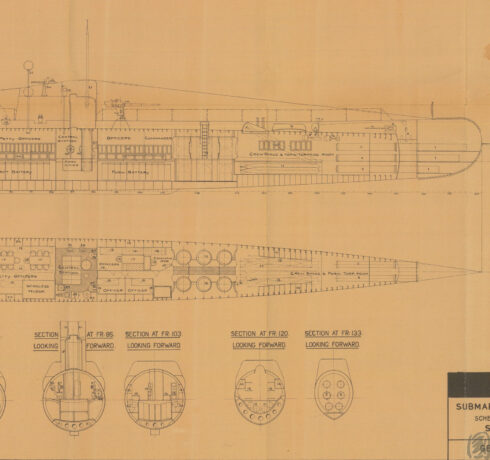
In November, an unusual drawing of a long-lost piece of Schelde history was discovered in the National Archives of Taiwan. In the 1930s, the Royal Schelde shipyard developed the Gunning-Schelde submarine minelayer. The design was offered to the Royal Netherlands Navy and several foreign navies, but it was never built.
The extensive Schelde archive – now managed by the Zeeuws Archief (Zeeland Archives) – contains little information about this unusual vessel, and no drawings seemed to have survived. But former Zeeuws Archief archivist Ron van Maanen, who has been interested in Dutch shipbuilding and especially the history of the Schelde his entire life, revealed that a drawing has finally been found – in Taiwan, of all places.
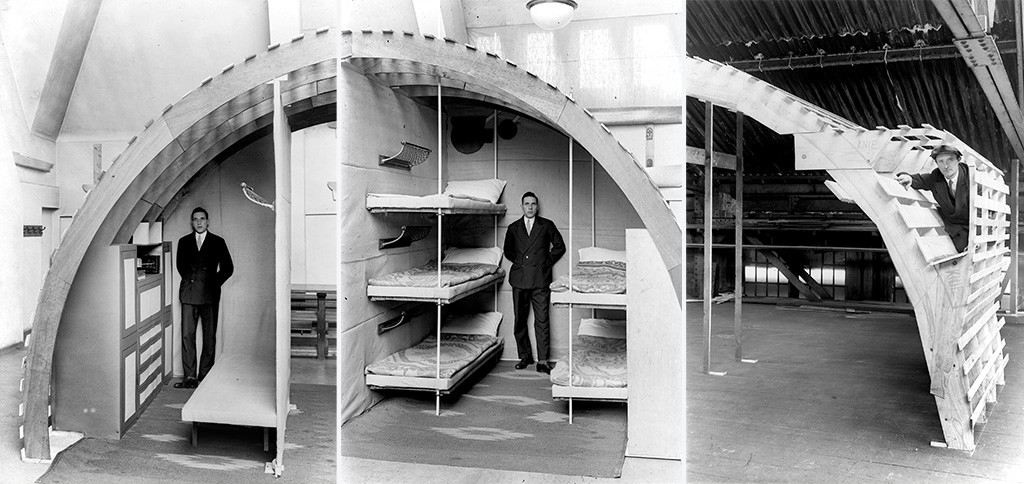 Some of the scale model photographs of the Gunning-Schelde submarine that can be found at the Zeeuws Archief.
“It has long been a question what the design of the Gunning-Schelde boat actually looked like. Presumably several designs were made, but the only image in the archives is an extremely simple sketch in a brochure,” says Ron. “There are also a few unique photos of scale half-models, but the otherwise rich Schelde archive contains no additional drawings. The only surviving drawing until now was a design produced by shipbuilding engineering company INKAVOS for Brazil.”
Hope for an original Schelde drawing had all but vanished until an international Internet forum began discussing the construction of warships for Nationalist China in the 1930s. “Someone commented that some dates had been mixed up, and they referred to a submarine offer from the Netherlands. My antennae immediately went up, because that could only mean two companies: Fijenoord and the Schelde.”
Ron contacted the person who made the comment. “He downloaded the documents for me from the National Archives in Taiwan. Almost in passing he mentioned that there were a few more documents relating to Dutch companies, and he downloaded those for me as well. Among the materials concerning the Schelde was information about a 1934 proposal for a submarine minelayer; including a drawing. You can imagine I nearly hit the ceiling.”
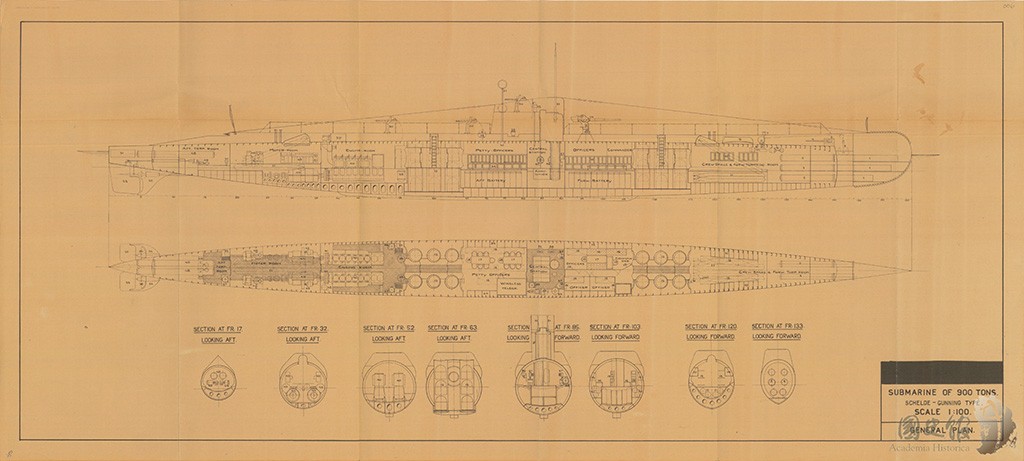 A drawing of a Schelde design thought to be lost was found in the National Archives of Taiwan.
A German invention
The submarine minelayer is a German innovation developed during the First World War. This special type of submarine has extra space or launching systems on board to deploy naval mines in enemy or strategically important waters. The boats proved so effective that the Allied navies soon developed their own submarine minelayers.
The peace treaty after the First World War stipulated that Germany could no longer possess submarines. The fleet was sold, and one of the submarine minelayers was taken over by the Royal Netherlands Navy. But there was also interest in a Dutch-built minelaying submarine. The Schelde had built and delivered the first Dutch submarine in 1906 and now saw another opportunity, Ron explains.
“The construction of a submarine minelayer only became possible when engineer Maximiliaan Fredrik Gunning transferred from the Royal Netherlands Navy to the Schelde in 1926, taking up the position of head of naval shipbuilding. In the late 1920s, the Gunning-Schelde submarine minelayer took shape on the drawing board.”
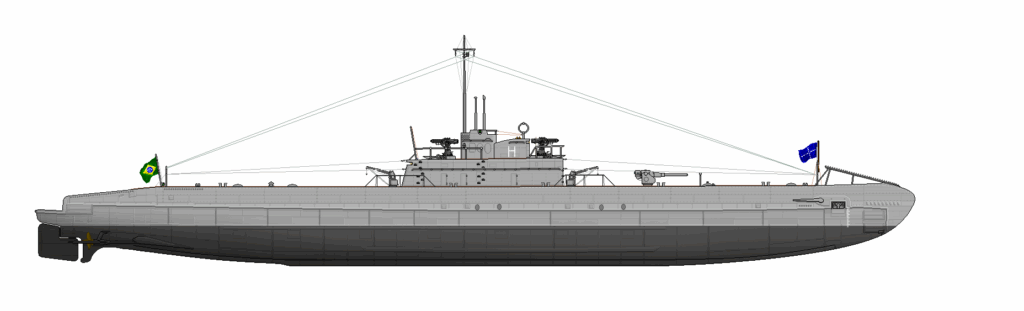 An artist impression of what the Gunning-Schelde submarine might have looked like.
The Schelde’s trump card
According to Ron, the Gunning-Schelde submarine minelayer was a “real trump card” for the Schelde. The drawing from Taiwan shows a submarine 76.50 metres long, with a surface displacement of 900 tons without mines and 950 tons with mines, and 1,122 tons submerged. The boat could reach 18.5 knots on the surface and 9.75 knots submerged. It had space for a 40-man crew. Armament consisted of eight 53.3cm torpedo tubes, one 10.2cm gun, and four 25mm machine guns. It could carry 36 mines, each with a 200-kilogram explosive charge. The maximum diving depth was 100 metres.
During the 1930s, the Schelde tried to sell the design worldwide. Talks were held with Norway, Portugal, Brazil, and China. “But the Schelde came up empty-handed everywhere. Even the Royal Netherlands Navy refused the design when the Schelde offered it during the tender for the order for HNLMS O 16. However, the Navy did write that the rejection was not due to the quality of the design,” Ron explains. “Sales to Portugal failed because the Netherlands would not provide government backing, although the attempt did lead to the founding of NEVESBU, which celebrates its 90th anniversary this year.”
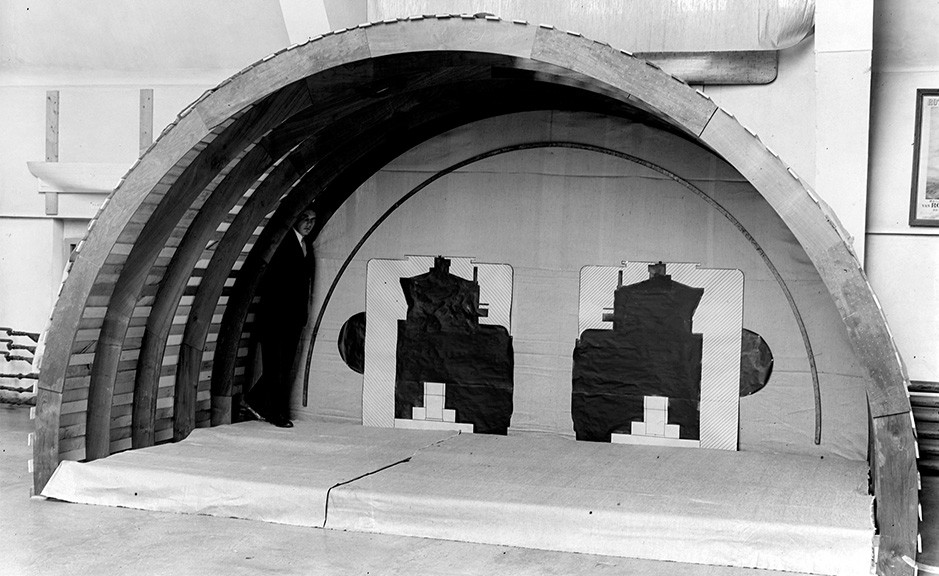 The half models were used to determine the scale of the submarines.
Max Gunning left the Schelde in the second half of the 1930s to join NEVESBU and worked with INKAVOS on a submarine minelayer for Brazil. But that effort also failed. “Competition between shipyards – both domestic and international – was fierce. Before the Second World War, the Schelde managed to secure only one foreign naval order: the Polish submarine ORP Orzeł. That had nothing to do with lack of quality. Without Dutch government support, the design was too expensive and competing effectively was nearly impossible. The sad conclusion is that the Schelde’s trump card was never played.”
>> Ron van Maanen (born 1958) worked as an archivist for the Vlissingen Municipal Archives and the Zeeuws Archief, where he handled, among other things, the archives of the Royal Schelde shipyard. He has published many articles on maritime history. Together with Tobias van Gent, he published ‘Luctor et Emergo. De onderzeeboten van de Koninklijke Maatschappij De Schelde 1905–1958’ in 2018′, and he recently contributed to the special anniversary book ‘Naval Excellence’, released by Damen Naval in honour of 150 years of the Royal Schelde shipyard.