
 Subscribe to the newsletter
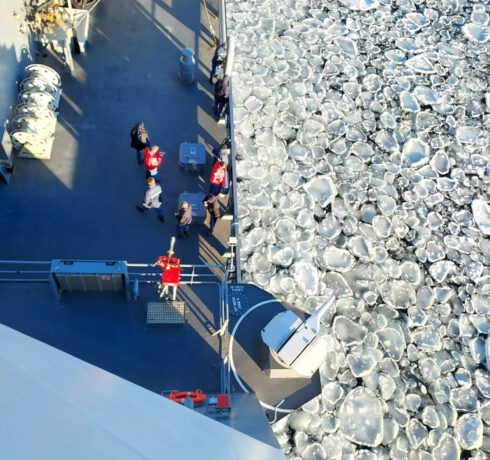
Combat Support Ship HNLMS Den Helder has returned to the Netherlands after successfully completing two trial voyages. The vessel departed for the Gulf of Bothnia at the end of January for the next phase of the sea trials: the cold weather trials. In the northernmost part of the Baltic Sea between Sweden and Finland, tests were conducted to determine whether the ship continues to function properly in icy conditions. This trip was a stark contrast to the warm weather trials that the ship underwent in November in Curaçao and the Caribbean. There, they checked whether the ship could be cooled sufficiently, something that was not a problem in the Gulf of Bothnia. This time, they checked whether the temperature inside could be maintained and whether the water supplies and other systems continued to function properly.
Text: Eefje Koppers
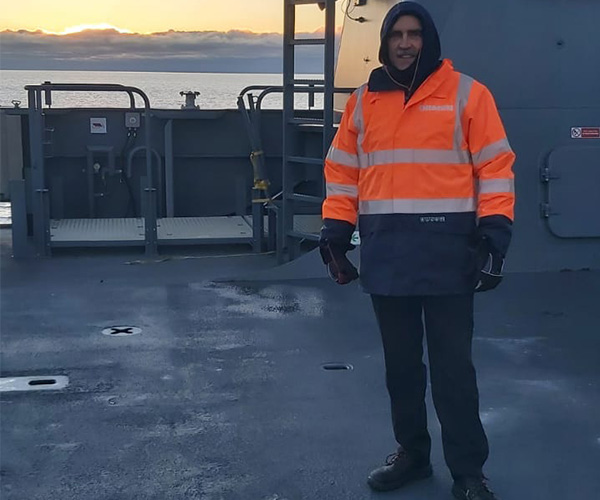 Damen Naval Project Director Arjan Risseeuw.
Just before departure, Damen Naval Project Director Arjan Risseeuw said he was looking forward to the cold weather trials. “It will be interesting to see how the ship performs in the cold, but I am confident.” Upon his return, Arjan said that the ship had responded as expected to the cold. “We have demonstrated that the ship is capable of operating in cold conditions. A few minor issues were identified, with some condensation found in certain areas of the ship, which we will now resolve.”
The CSS departed from its home port of Den Helder on Friday 23 January and sailed around Denmark towards the ice in the Gulf of Bothnia. Arjan: “We sought out the cold water to see whether systems such as deck equipment and the cooling water supply would continue to function. We also wanted to see if the boilers had sufficient capacity to provide enough hot water for all users and to maintain the required temperature in all areas on board.”
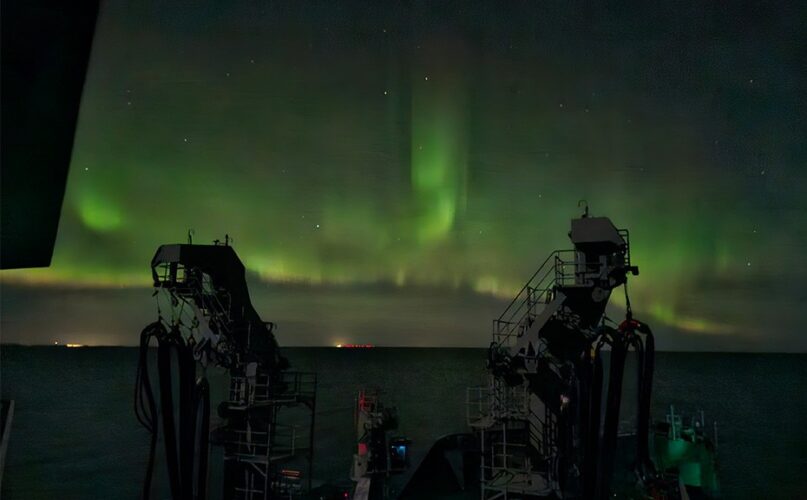
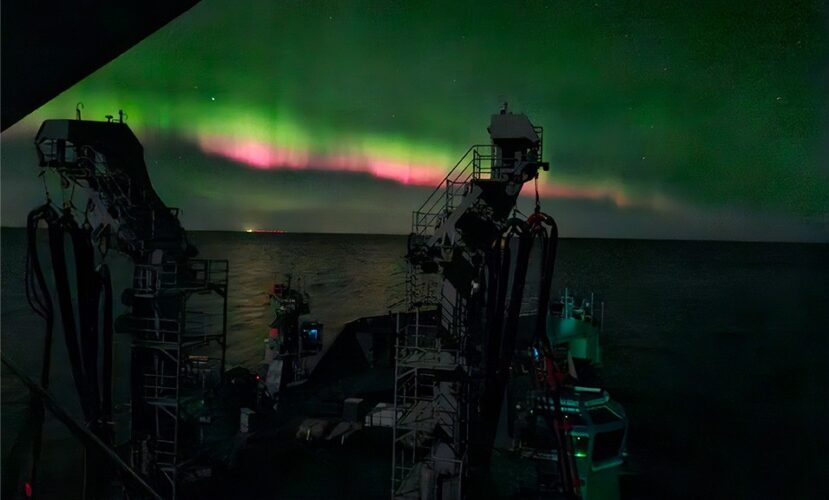
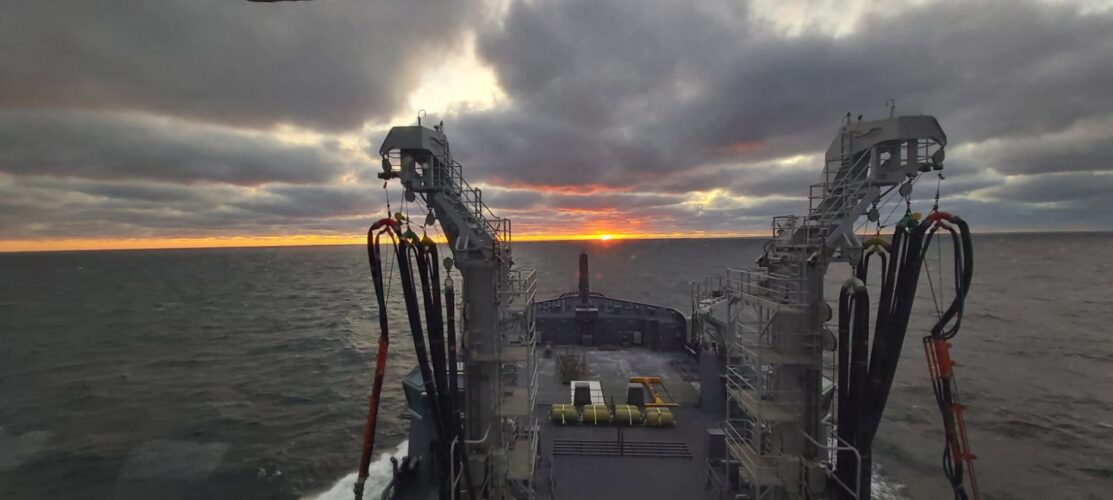
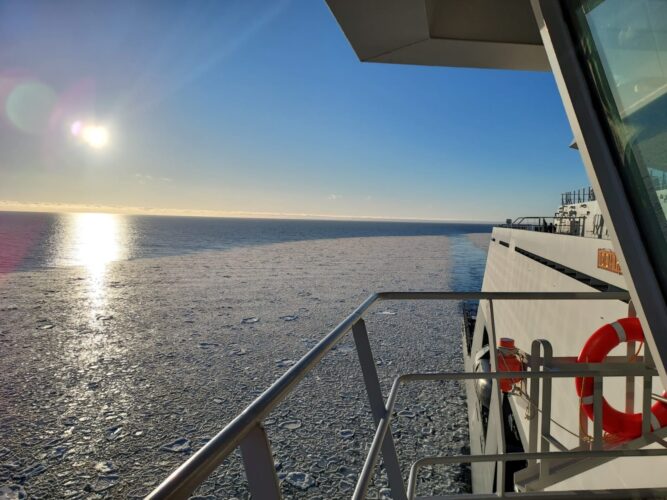
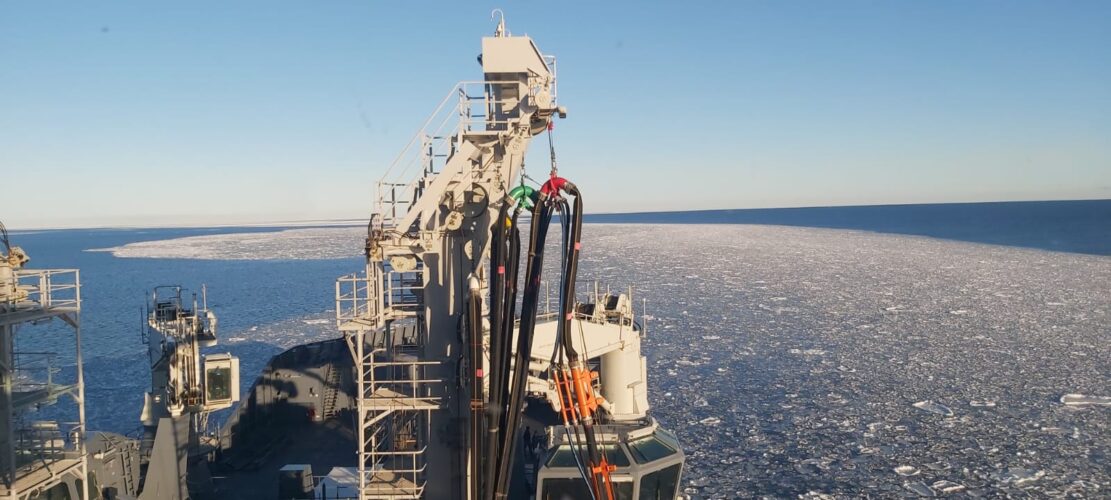
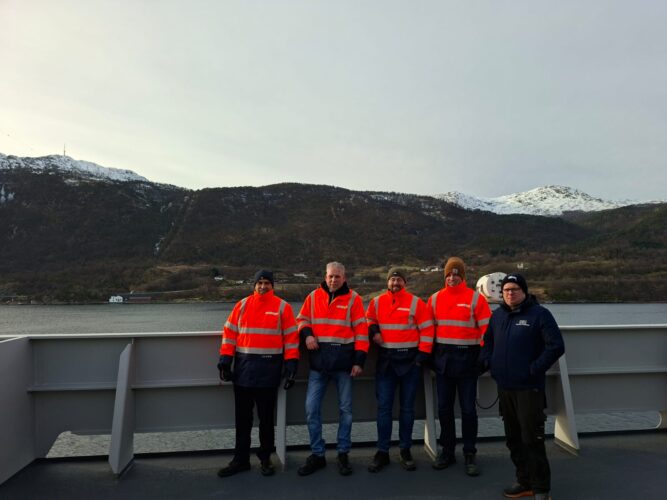
See below for photos of the cold weather trials, including photos of the Northern Lights taken by Rinko Rottier, and a group photo with, from left to right, Arjan Risseeuw, Rinko Rottier, Martijn Maas, and Niels Karremans from Damen Naval, and Christian Horga from Heinen & Hopman.
In November, the CSS sailed to Curaçao for the warm weather trials. In the Caribbean, tests were conducted to see if the ship and its systems could withstand high temperatures and high humidity. In an interview in Materieel Gezien, the news magazine of the Materiel and IT Command (COMMIT), the project manager said that the warm weather trials had gone well. Arjan agrees: “No serious problems were found and the ship coped well with the journey to and from the Caribbean.”
A challenge arose after the Damen Naval team had disembarked in Santo Domingo in the Dominican Republic. “The CSS sailed on to Norfolk in the United States for a port visit, and the intention was for it to return to the Netherlands afterwards, so that we still had a few weeks to prepare for the cold weather trials and resolve outstanding issues,” Arjan explains.
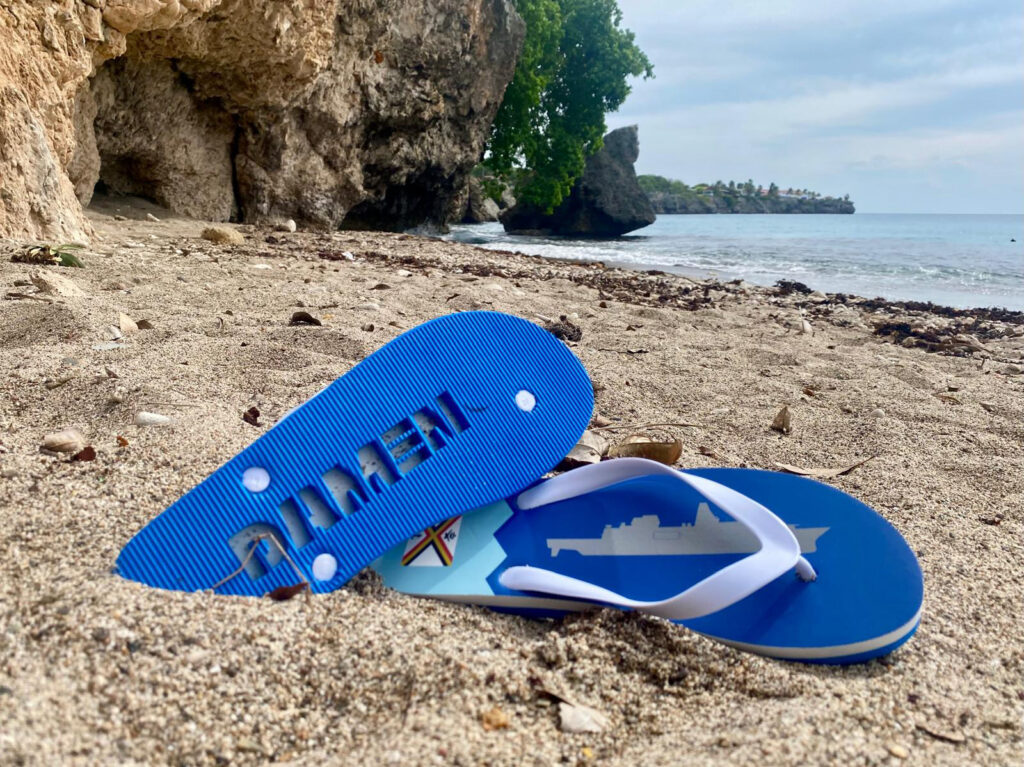 The high temperatures in and around Curaçao were in stark contrast to the cold in the Gulf of Bothnia.
However, the plans changed. Following the American intervention in Venezuela, the Netherlands Ministry of Defence decided as a precaution to send HNLMS Den Helder back to Curaçao due to ongoing tensions in the region. Arjan says, “In the end, the ship returned to the Netherlands just before Christmas. This did put some pressure on the planning for dealing with the outstanding work, but we departed according to schedule for the cold weather trials.”
After approximately two weeks at sea and in the Gulf of Bothnia, the CSS sailed to Bergen in Norway, where the Damen Naval team disembarked. “COMMIT spent another week conducting underwater noise measurements, after which the ship returned to the Netherlands,” Arjan explains. “We now have about four weeks left for any outstanding issues and works, and another one or two weeks of sea trials before the ship is handed over to the Royal Netherlands Navy.” Another docking is planned in Amsterdam in September for, among other things, an inspection of the hull and any additional work that may be requested.