
 Subscribe to the newsletter
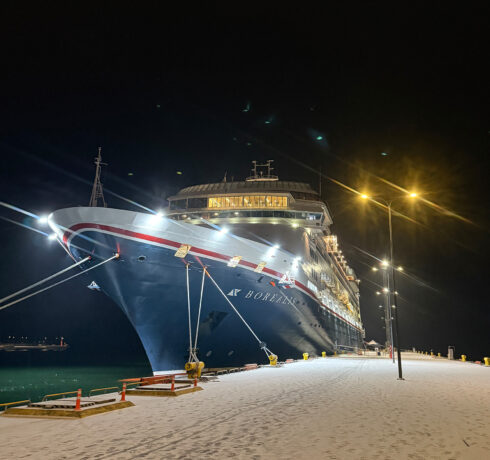
Representing its first full size maintenance contract for the cruise vessel market, Damen Schelde Marine Services (DSMS) has successfully completed a full 12,000-hour overhaul of a Sulzer 16ZAV40S engine on board the Fred Olsen Cruise Lines-owned vessel Borealis. The project demonstrates DSMS’s ability to deliver an end-to-end service solution – from spare parts supply and logistics to reconditioning and full on-board execution – without outsourcing any part of the scope to subcontractors.
Text: Tom Scott
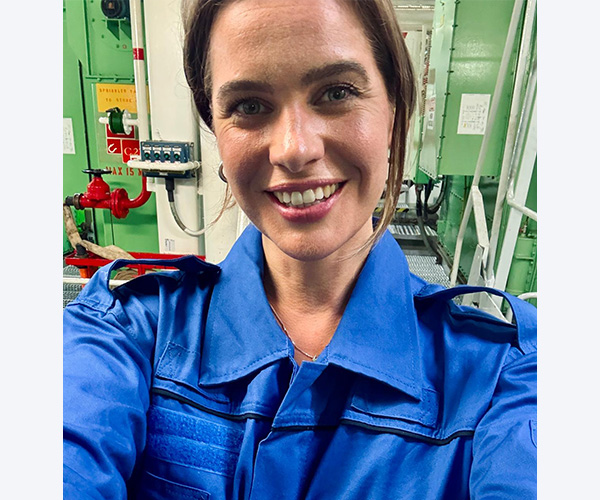 Josine Glerum, DSMS UK & Scandinavia Sales Manager.
“For this project, we really did everything ourselves,” says Josine Glerum, DSMS UK & Scandinavia Sales Manager. “Spare parts, workshop reconditioning, transport, and all service work on board. Not many companies can offer such a complete package, and I’m extremely proud of what we achieved as a team since every department from our company was involved. This really was a full-service project, handling everything for the client.”
Full overhaul package
The Borealis, formerly part of the Holland America Line fleet, is equipped with five identical 16-cylinder Sulzer 16ZAV40S engines. Because only three engines are required for sailing at any given time, DSMS could overhaul the engine in question while the vessel remained fully operational with a full complement of passengers.
DSMS carried out the pre-inspection of the engine back in June. The purpose of this was to assess the engine’s condition, review performance reports, check all tools and equipment and meet the vessel’s engineering crew. Read more about that here. The overhaul phase of the project took place in November and December 2025, with DSMS dividing the scope into three phases: disassembly, workshop reconditioning, reassembly including test run.
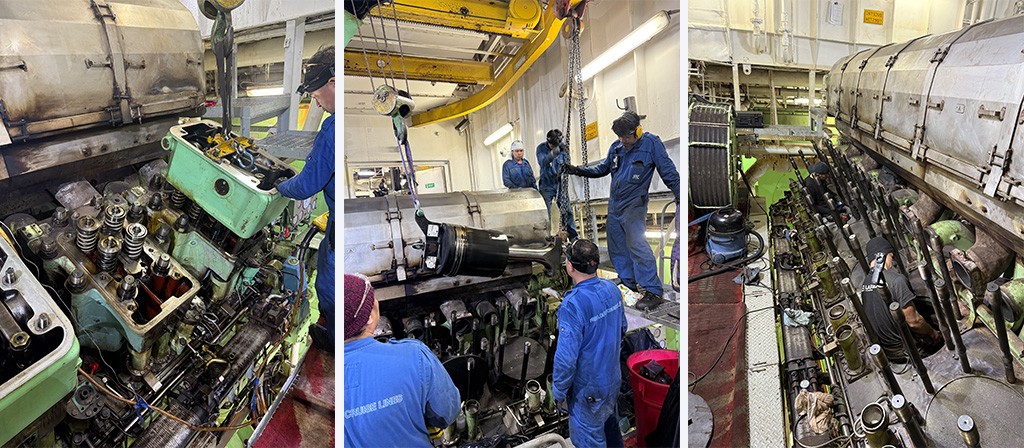 The disassembly phase of the project took place while the ship was sailing with a full complement of passengers.
The DSMS team consisted of one senior service engineer and five service engineers, supported by a Sulzer specialist who provided technical input mainly in the preparation phase. There was one additional team member on board: Josine herself.
“Joining this project as an ‘engineer was very special for me,” Josine explains. “I was on board for two 10-day blocks, working fully alongside the team. Long days, hard work, hot, loud, dirty – nothing is comfortable down there in the engine room. I was covered in oil and bruises. But I wouldn’t have missed it for the world.”
"Long days, hard work, hot, loud, dirty – nothing is comfortable down there in the engine room. I was covered in oil and bruises. But I wouldn’t have missed it for the world.” Josine Glerum
Disassembly during a ‘surprise cruise’
The first phase – disassembly – took place between 5 and 14 November, while the ship was sailing. Coincidentally, this period coincided with a so-called ‘surprise cruise’, the sailing itinerary of which was unknown to the passengers (only that it would start and finish in Southampton). “It’s quite special to work on a working cruise ship,” says Josine. “You sleep in regular passenger cabins, there’s daily housekeeping, and you eat in the same restaurants as the guests. But after a day in the engine room, the challenge is to get yourself clean enough to walk around in public areas.”
During disassembly, the team removed, among others:
- 16 cylinder heads
- 16 cylinder liners
- 16 rocker boxes
- 16 fuel pumps
- 16 injectors
- 16 piston assemblies
- 4 charge air coolers
All components are extremely heavy, meaning every movement on board requires crane operations. After landing the parts in Southampton, two full trucks transported them to the Netherlands for workshop reconditioning.
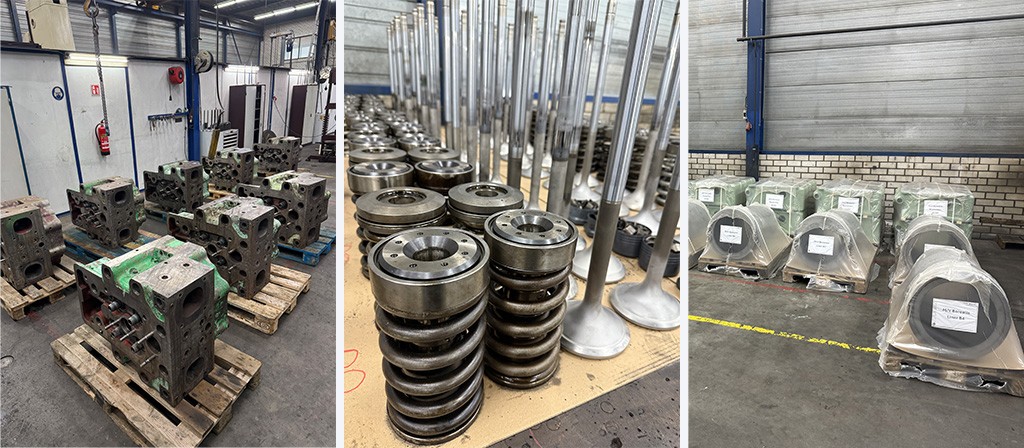 In the workshop, all disassembled parts were cleaned, measured, overhauled, inspected, reported, painted and carefully packed.
Workshop reconditioning: giving parts a new lease of life
In the workshop, all parts were cleaned – many in ultrasonic baths – measured, overhauled, inspected, reported, painted and carefully packed. Only limited unexpected damage was found, and reconditioning progressed smoothly. “Some of the parts really came out looking like new,” says Josine. “Everything was labelled and prepared so it could be shipped back to the vessel in a fully controlled manner.”
Reassembly and additional scope
Reassembly took place in Hamburg from 10 to 20 December. During the earlier disassembly phase, cavitation damage was discovered on the upper bushes after removing the cylinder liners. Two senior engineers arrived five days earlier than planned to remove the old bushes, by carefully removing them with a grinder, and install new bushes using liquid nitrogen cooling.
“It’s a very precise job that requires real craftsmanship,” Josine explains. “And this is typical for these kinds of projects: even with good preparation, the scope tends to grow once you open the engine and speak with the chief engineer who is always interested in adding some extra projects. Like the charge air coolers, for example.”
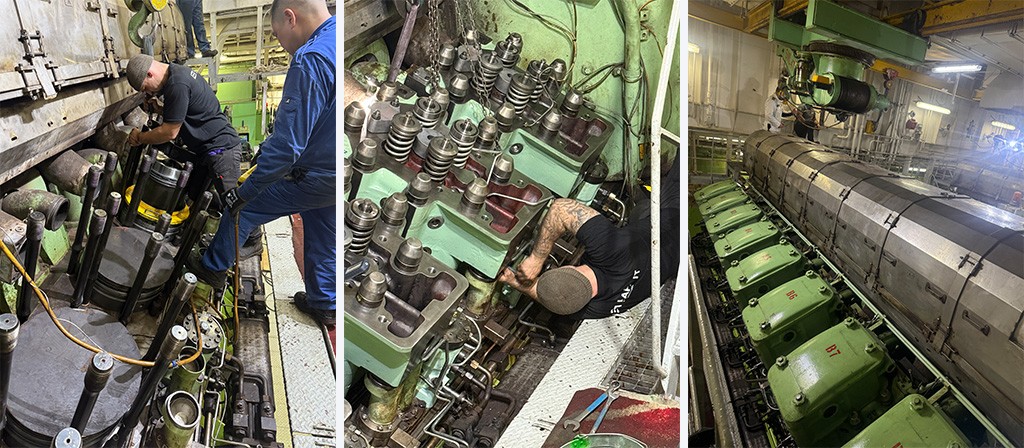 Reassembly took place in Hamburg from 10 to 20 December, concluding with a test run of the engine.
Throughout reassembly, extensive measurements were taken and recorded for the final report, ensuring full compliance with the maker’s specifications. The project concluded with a test run of the engine that finished on 20 December. This was coordinated closely with the vessel’s technical staff and took local environmental regulations in certain sailing areas into account.
Zero room for mistakes
“All went well. The ship’s Chief Engineer, Staff Chief and First Engineer were all happy with the work and indicated that they would like us to carry out the next overhaul as well,” Josine adds. “A great feeling – and we were home in time for Christmas as planned!”
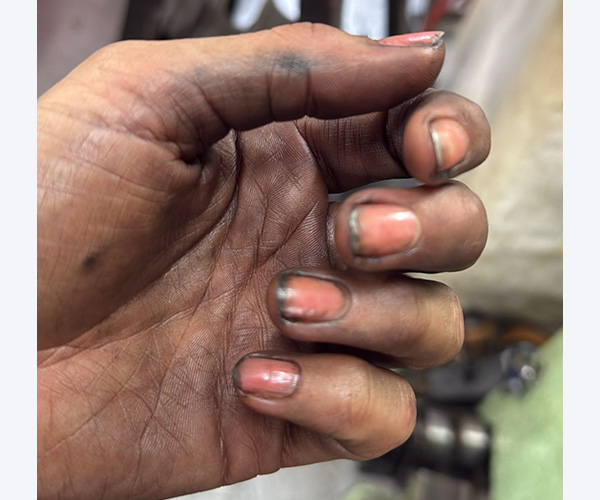 Dirty hands, but one of the coolest things Josine has ever done.
For DSMS, the successful execution of this project confirms its position as a full-scope service partner in complex engine maintenance. For Josine, this hands-on experience makes all the difference in her role as sales manager. “With service projects, there is zero room for mistakes. Something as small as sending the wrong O-ring can stop the entire engine assembly. By being there, getting your hands dirty, you truly understand the impact of every decision. Moreover, it helps me enormously when discussing upcoming projects with customers and when preparing scopes. I can honestly say this is one of the coolest things I did in 2025.”