 Subscribe to the newsletter
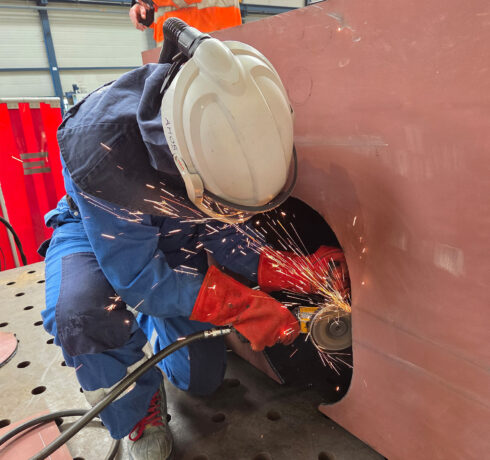
At Vlissingen-Oost, a lot of work has been done in the pipe shop in recent weeks; only this time not by Production staff, but by colleagues from Engineering. In groups of four or five, they took part in a workshop where they learned cutting, grinding and welding to gain a better understanding of the challenges involved in this specialised work.
Text: Eefje Koppers
Participants were presented with a small steel box on which they had to mark a 40 by 60 cm manhole using a hammer and a centre punch. They then had to cut it out using a plasma cutter. The next step was to grind down the edges so they could safely enter the box and weld a small steel plate onto the inside wall.
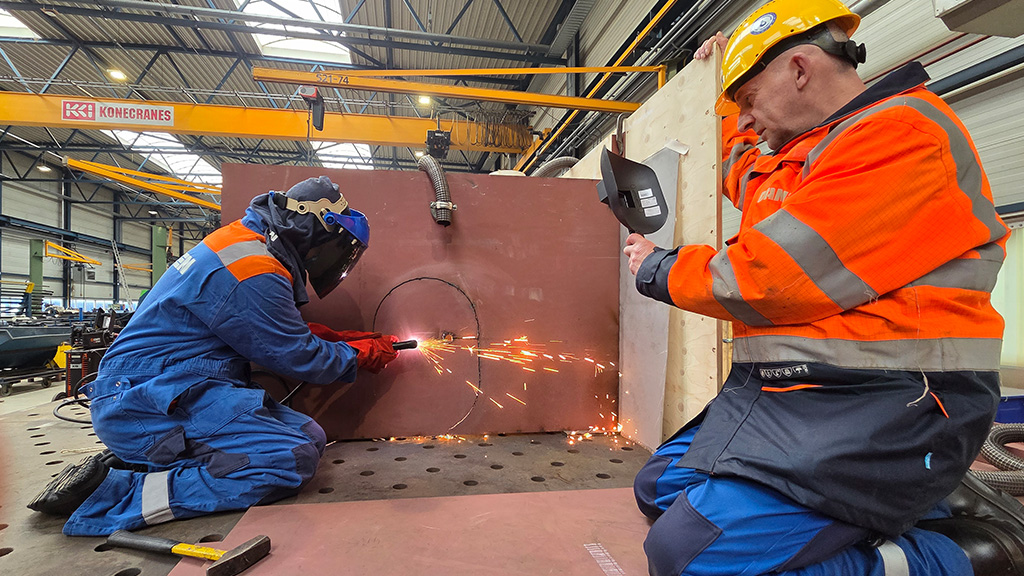 Senior Construction Foreman Cees van Cadsand watches as one of the engineers cuts the manhole with a plasma cutter.
“The idea for the workshops came from Structures Engineer Paul Jobse, and the goal is to let engineers experience production work and understand the consequences that even a small technical drawing change can have on the construction of a ship,” explains Project Manager Manufacturing Engineering Lars Schoon, who set up the workshops and supervised the first two. “Making changes to an existing ship costs a lot of time and money. On a computer, you can move something or add a manhole with just a few clicks, but in practice it’s not that easy. That’s what we wanted the engineers to experience in these workshops.”
Project Manager Manufacturing Engineering Pim Simons participated in the workshop during the first week and replaced Lars as supervisor during the third workshop. “It’s interesting to discover how much is involved. It’s physical work and not something you can master all at once. What I find especially interesting is the lead time; how long everything takes and what you need to bring with you to be able to do the job.”
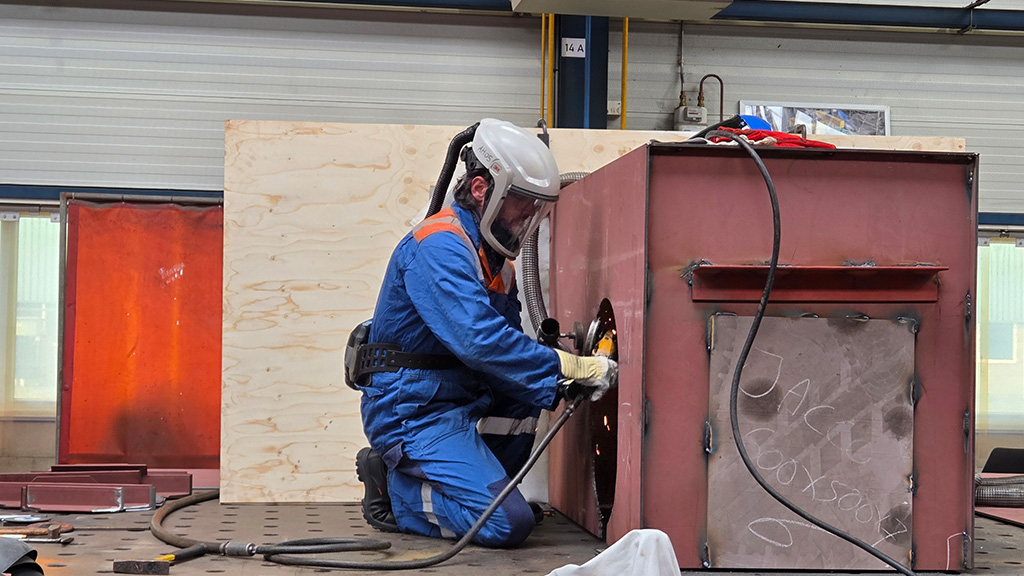 To prevent clothing or tools from getting caught, the edges of the manhole are ground smooth.
The workshops are supervised by Senior Ironwork Foreman Cees van Cadsand and Senior Welding Foreman Kees Janse. Cees says: “There was a need from Engineering to set up these workshops, and it’s very educational for both sides. You get to know people and learn more about each other’s work. That creates more understanding.”
Welding specialist Kees adds: “On paper, changes are easy to come up with, but in practice they can have a major impact when it comes to implementing them. Sometimes it’s very difficult to reach the location on the ship or to get your tools and equipment there. Do the cables and hoses reach far enough? Sometimes you have to make an extra hole just to gain access, but then that hole also has to be closed again. There’s a lot involved.”
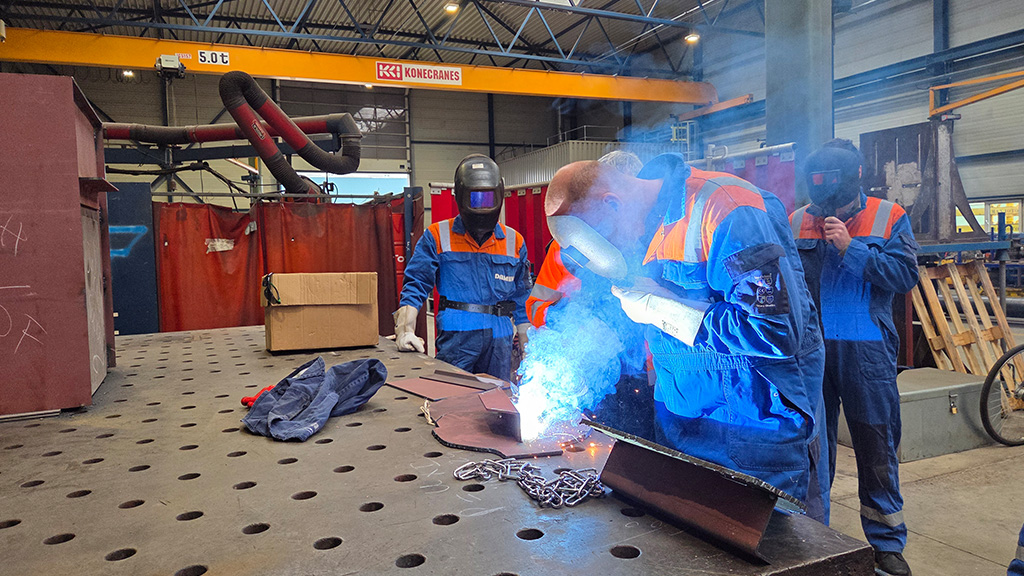 Before the participants crawled into the steel box to weld, they were given the opportunity to do some test welding.
The first three workshops have been a great success. “It’s fun to see that people are a bit hesitant at first,” Kees laughs. “They find the plasma cutter scary, but once they’ve done it, they think it’s cool. Their enthusiasm makes us enthusiastic too.”
The first series of workshops is a pilot. If desired, more workshops may be organised in the future.